

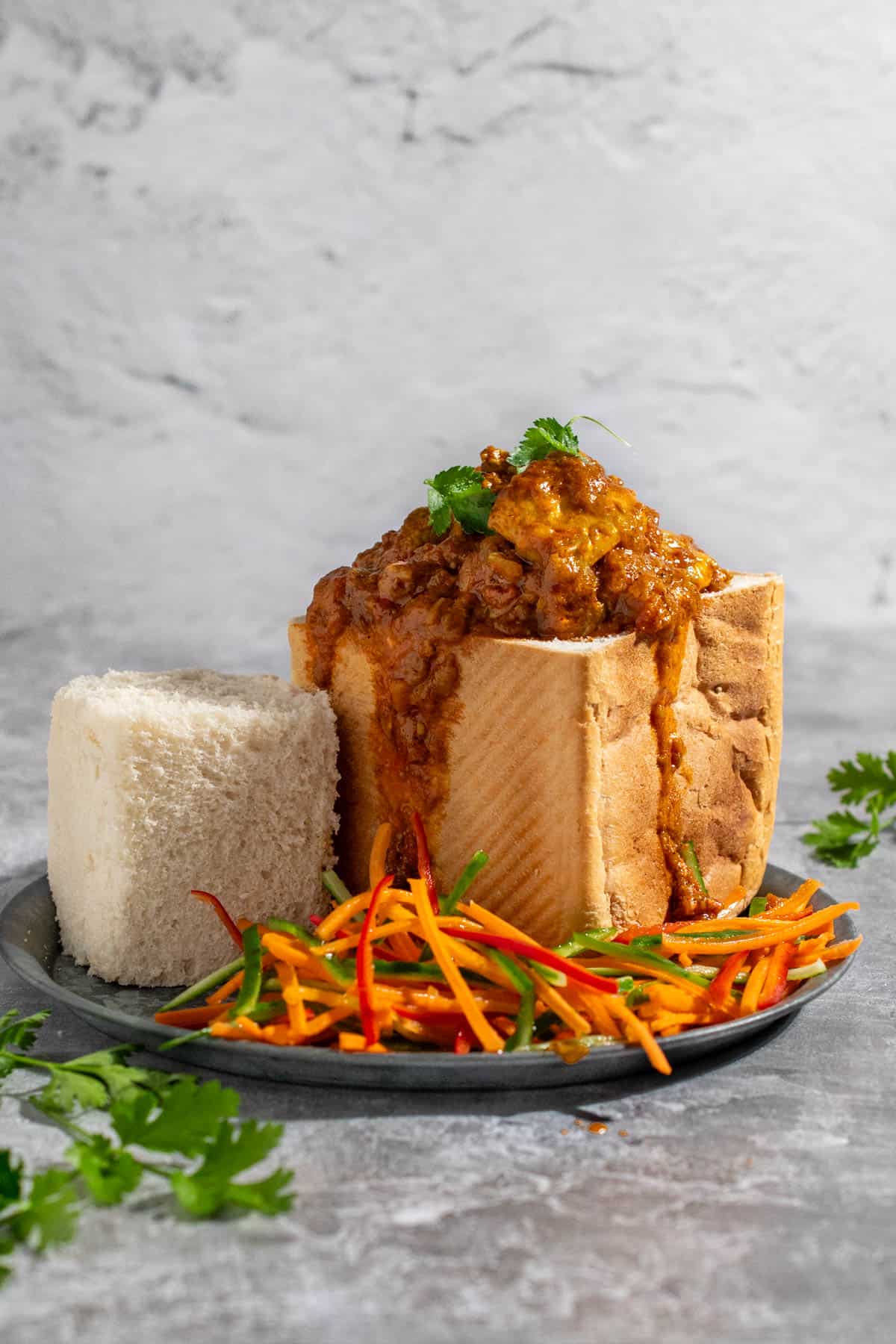
Bunny chow is a Durban-style South African curry served inside a hollowed-out loaf of white bread. This homemade chicken bunny chow is made with tender chicken thighs in a mildly spiced curry, then spooned into a quarter loaf with the soft bread "virgin" served on the side for dipping.
It's hearty, messy in the best way and properly comforting. The curry starts mild and family-friendly, but you can add fresh chilli, cayenne or hotter Durban masala if you want more heat.
Jump to:
What is bunny chow?
Bunny chow, often simply called a "bunny" in South Africa, is a curry served inside a hollowed-out loaf of white bread. It originated in Durban's Indian South African community and is usually filled with mutton, lamb, chicken, beans or vegetable curry.
Despite the name, it has nothing to do with rabbit. The bread acts as both bowl and side dish, soaking up the curry as you eat.
Why this bunny chow recipe works
- Chicken thighs stay tender - they simmer in the curry without drying out.
- Mild to start - use mild Durban masala or curry powder, then add chilli if you want more heat.
- The sauce is thick enough for bread - not too runny, not too dry.
- Proper bread-bowl structure - square unsliced loaves give you sturdy quarter bunnies.
- Good make-ahead curry - the curry tastes even better the next day; assemble the bread just before serving.
A few bunny chow facts
- Bunny chow is usually called a bunny in South Africa.
- A quarter bunny is made with a quarter loaf; a half bunny uses half a loaf.
- The soft bread removed from the middle is often called "the virgin" and is served with the curry.
- One theory links the name to Durban's Indian community and the word "bania", although the exact origin is debated.
Key ingredient notes and substitutions
You'll find the full ingredient list with measurements in the recipe card at the bottom of the post.
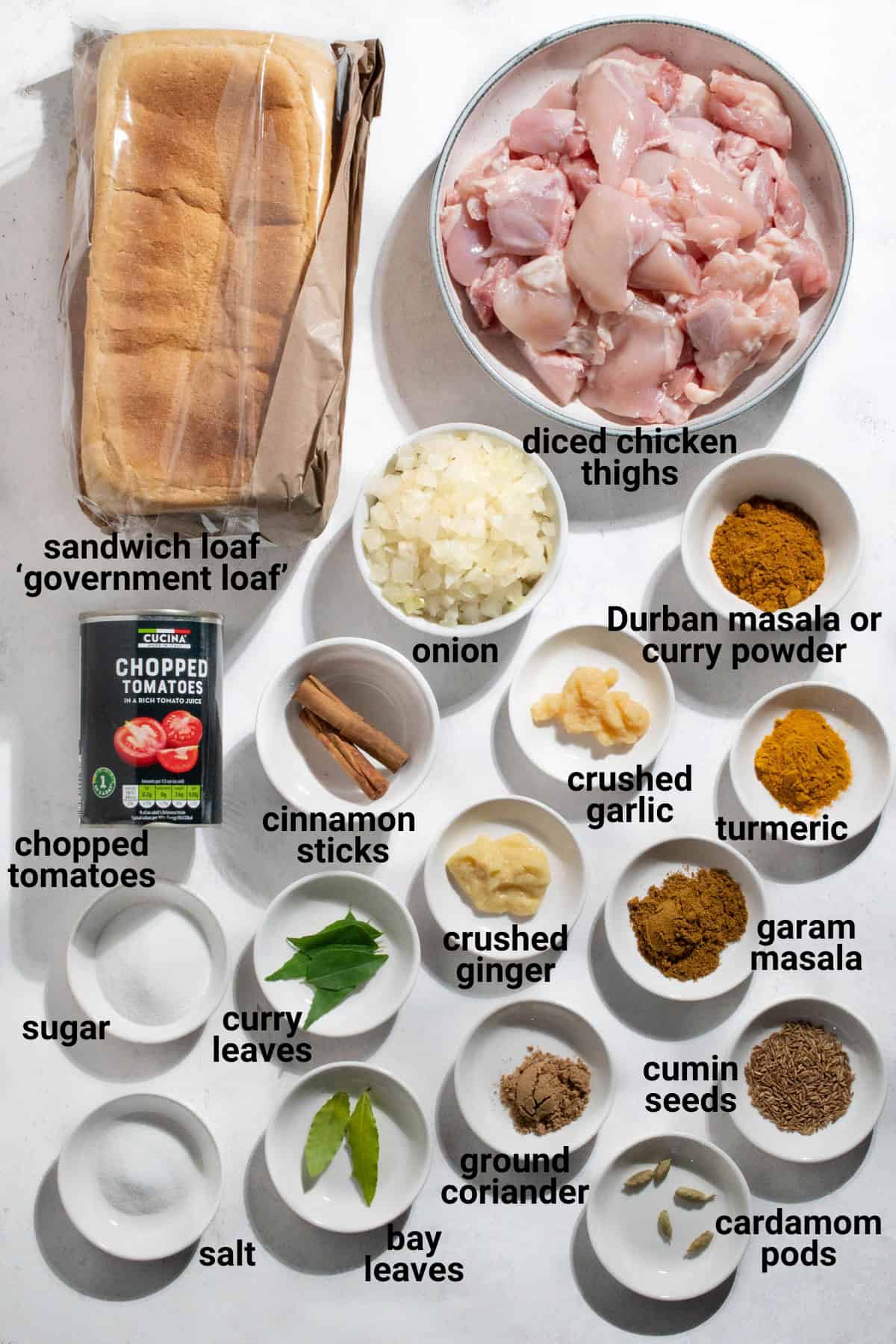
White unsliced sandwich loaf
Traditional bunnies are made with unsliced white sandwich loaves with square ends, sometimes called government loaves in South Africa. The square shape helps the bread stand upright and hold the curry.
For four quarter bunnies, you'll need two loaves and you'll use the end pieces so each bread bowl has a sturdy bottom. Avoid rounded loaves unless you're making mini versions, as they don't hold the curry as neatly.
Chicken thighs
Skinless, boneless chicken thighs stay juicier than chicken breast and work well in a simmered curry. Cut them into generous bite-sized pieces so they stay tender and don't fall apart.
Can you use lamb instead?
You can swap the chicken for lamb. Use the same weight of lamb, add 2-4 cloves if you like, and simmer for 15-20 minutes longer, or until tender. Keep an eye on the liquid level.
Durban masala spice or curry powder
Durban masala gives the most recognisable Durban-style flavour, but it can vary from mild to very hot.
This recipe uses 4 teaspoons based on a mild Durban masala or mild curry powder.
If you can't find Durban masala, use a good mild or medium curry powder and add extra chilli only if you want more heat.
Curry leaves
Fresh curry leaves add a distinctive savoury, citrusy curry flavour. Dried curry leaves can be used if that's what you have, but the flavour will be softer.
If you can't find them, leave them out rather than replacing them with curry powder; curry leaves and curry powder are not the same thing.
Tinned tomatoes
Chopped tomatoes form the base of the curry sauce. Cook them down for a few minutes so the sauce thickens and tastes richer.
Sugar
A small amount balances the acidity of the tomatoes without making the curry sweet. It's worth keeping in for a rounder sauce.
Salt
Don't under-season the curry. Bunny chow needs a well-seasoned filling because the bread softens and absorbs the sauce.
How to make bunny chow
1. Dice the chicken thighs into generous bite-sized pieces and chop the onions.
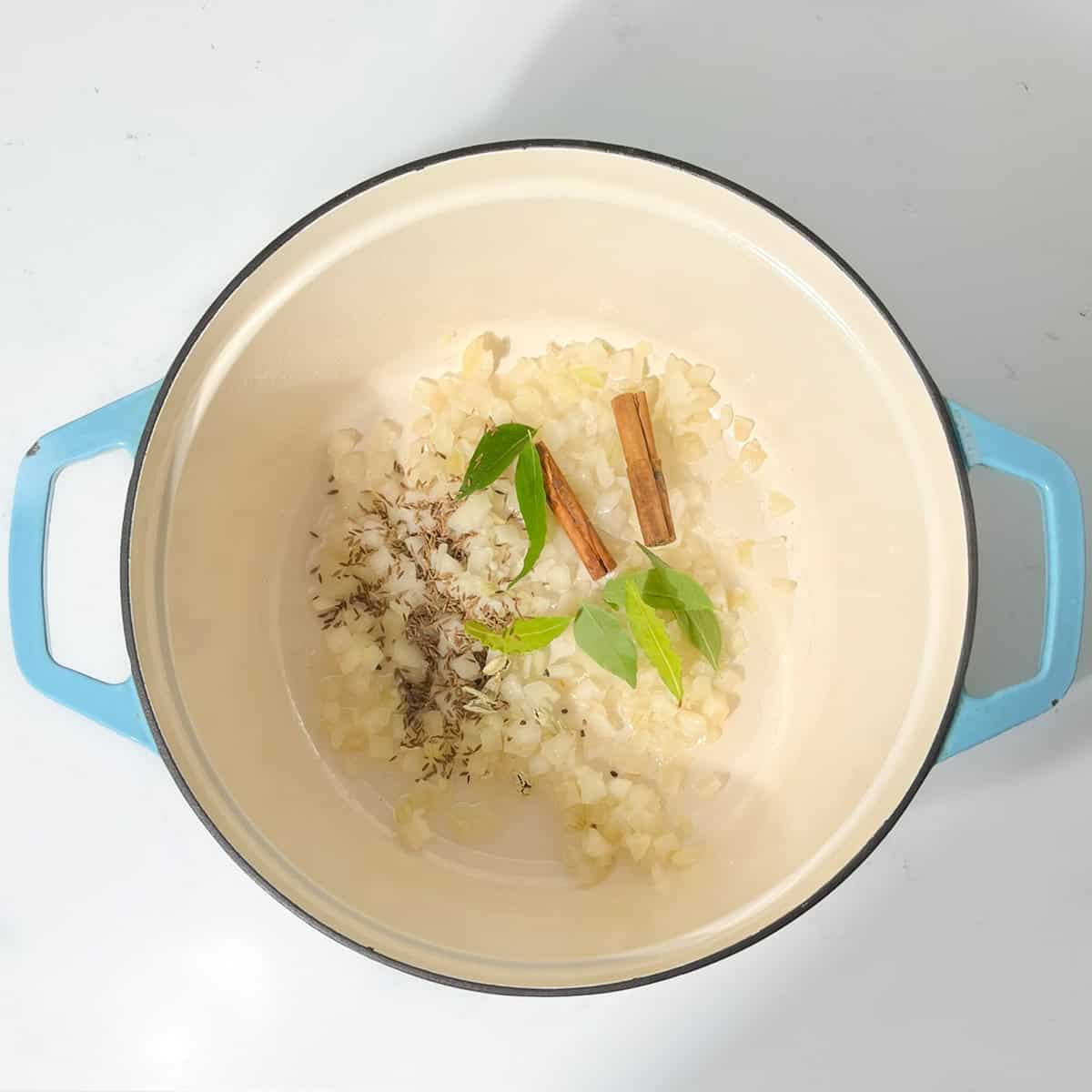
2. Heat the oil in a large saucepan over medium-high heat. Add the onions, cinnamon sticks, bay leaves, curry leaves, cumin seeds and crushed cardamom pods.
3. Reduce the heat to medium and cook for about 5 minutes, stirring often, until the onions are soft, translucent and just starting to turn light golden.
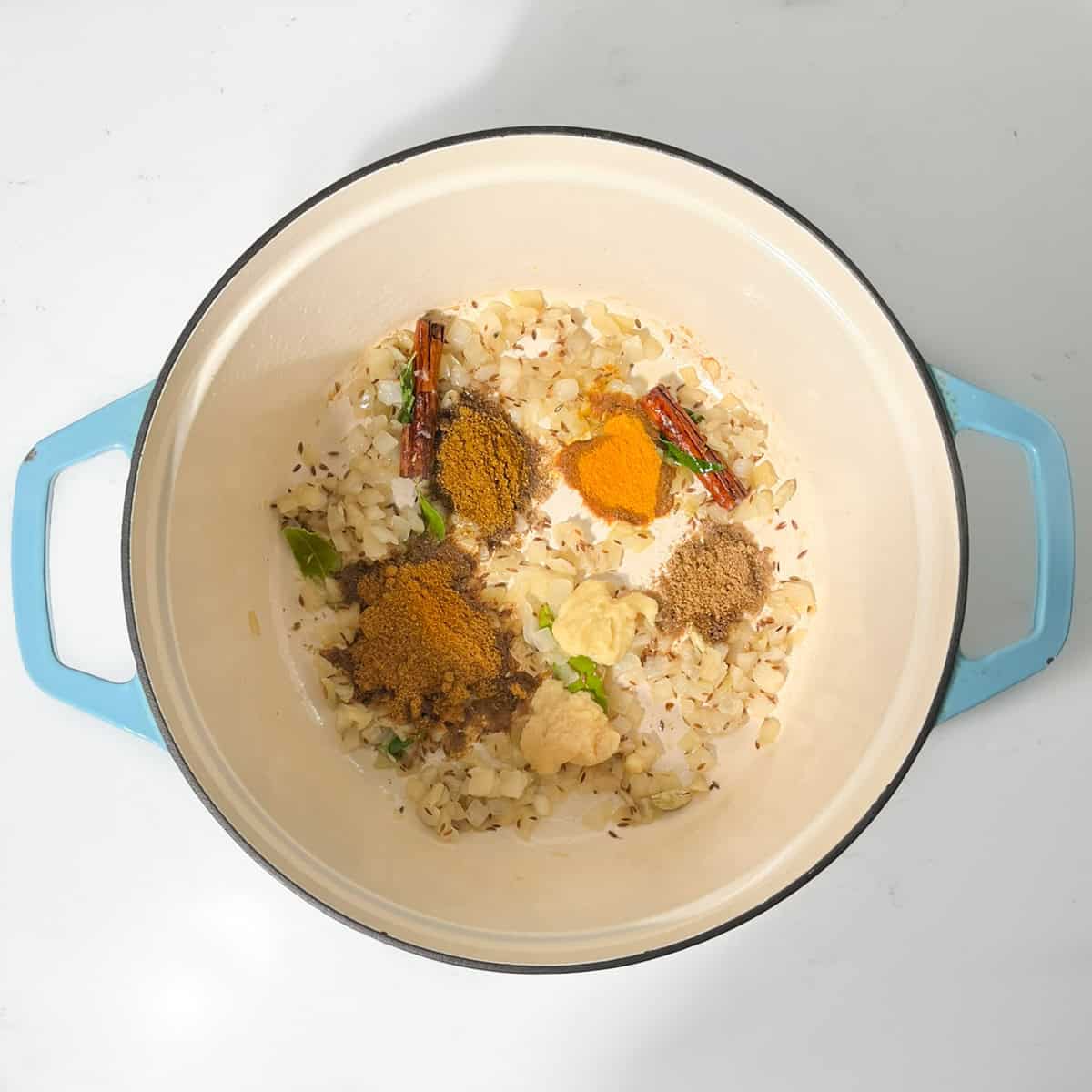
4. Add the Durban masala or curry powder, garam masala, turmeric, ground coriander, garlic and ginger. Cook for 1 minute, stirring and scraping the bottom of the pan so the spices don't burn. They will start to stick slightly, which is normal, but lower the heat if they catch too quickly.

5. Add the tinned tomatoes and stir them into the spices. Cook for about 3 minutes, stirring and scraping often, until the tomato mixture thickens slightly and looks darker and richer. If it starts to catch, turn the heat down.

6. Add the salt and sugar and stir them through the sauce.

7. Add the chicken pieces and stir until they are well coated in the sauce. Cook for 2-3 minutes.
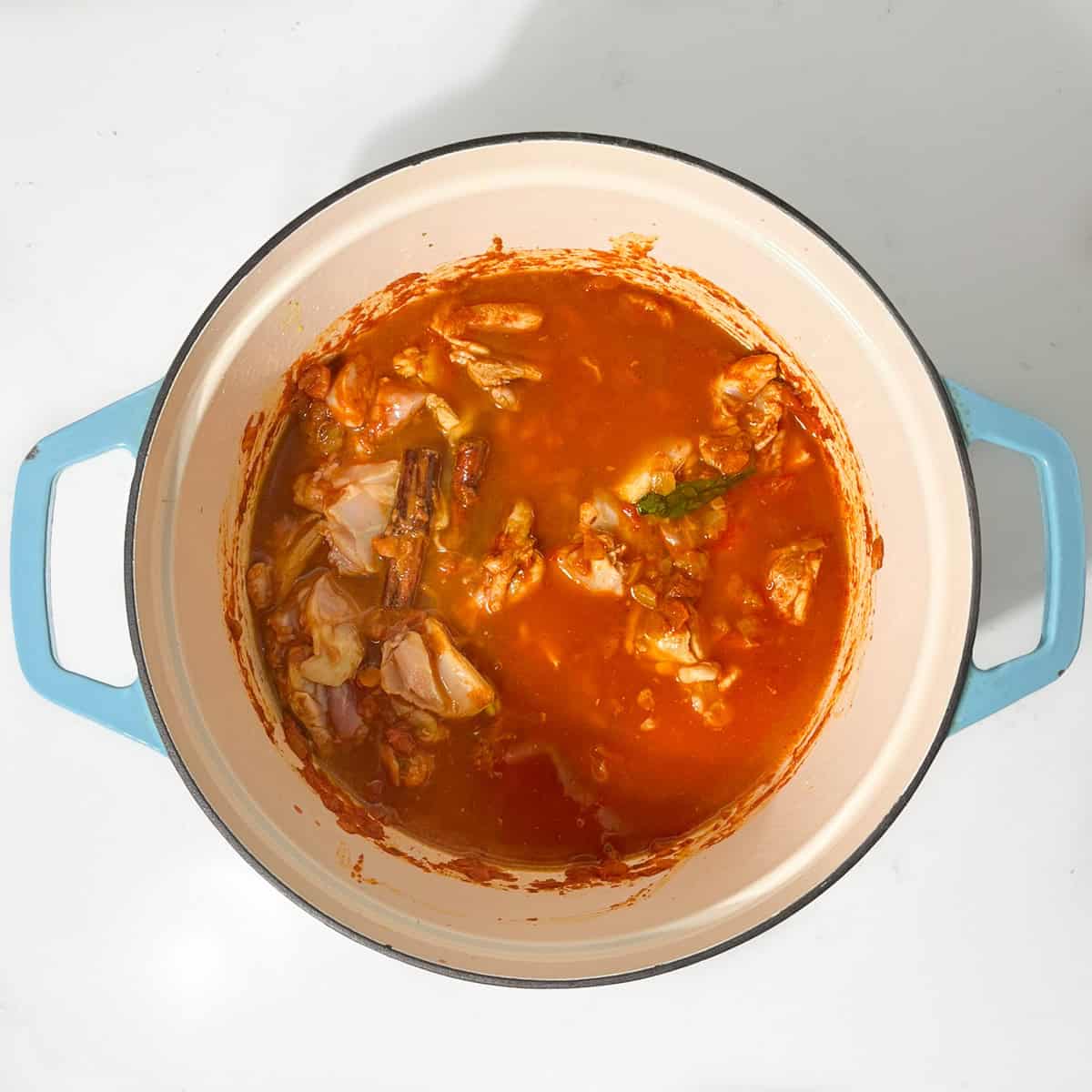
8. Add enough water to almost cover the chicken, but not fully cover it. Bring to a gentle simmer.

9. Cover the pan with a lid and simmer over low heat for about 30 minutes, or until the chicken is tender. Stir occasionally to stop the curry from sticking.
Check the consistency halfway through cooking. If the curry looks too saucy at the 15-minute mark, remove the lid and let some of the liquid evaporate. The curry should be thick enough to sit in the bread without flooding it, but saucy enough for dipping the torn bread pieces.
Prepare the bread bowl

10. Slice the bread in half for a "half bunny", or into quarters for "quarter bunnies". This recipe makes two half bunnies or four quarter bunnies.

11. Using a sharp serrated knife, cut a square into each piece of bread to create a hollow, leaving a border of roughly 2cm around the sides and bottom. Don't cut all the way through the bottom. The base needs to stay intact so it can hold the curry.
Gently ease out the soft bread from the middle. This piece is often called the "virgin" and is served on the side for dipping into the curry.
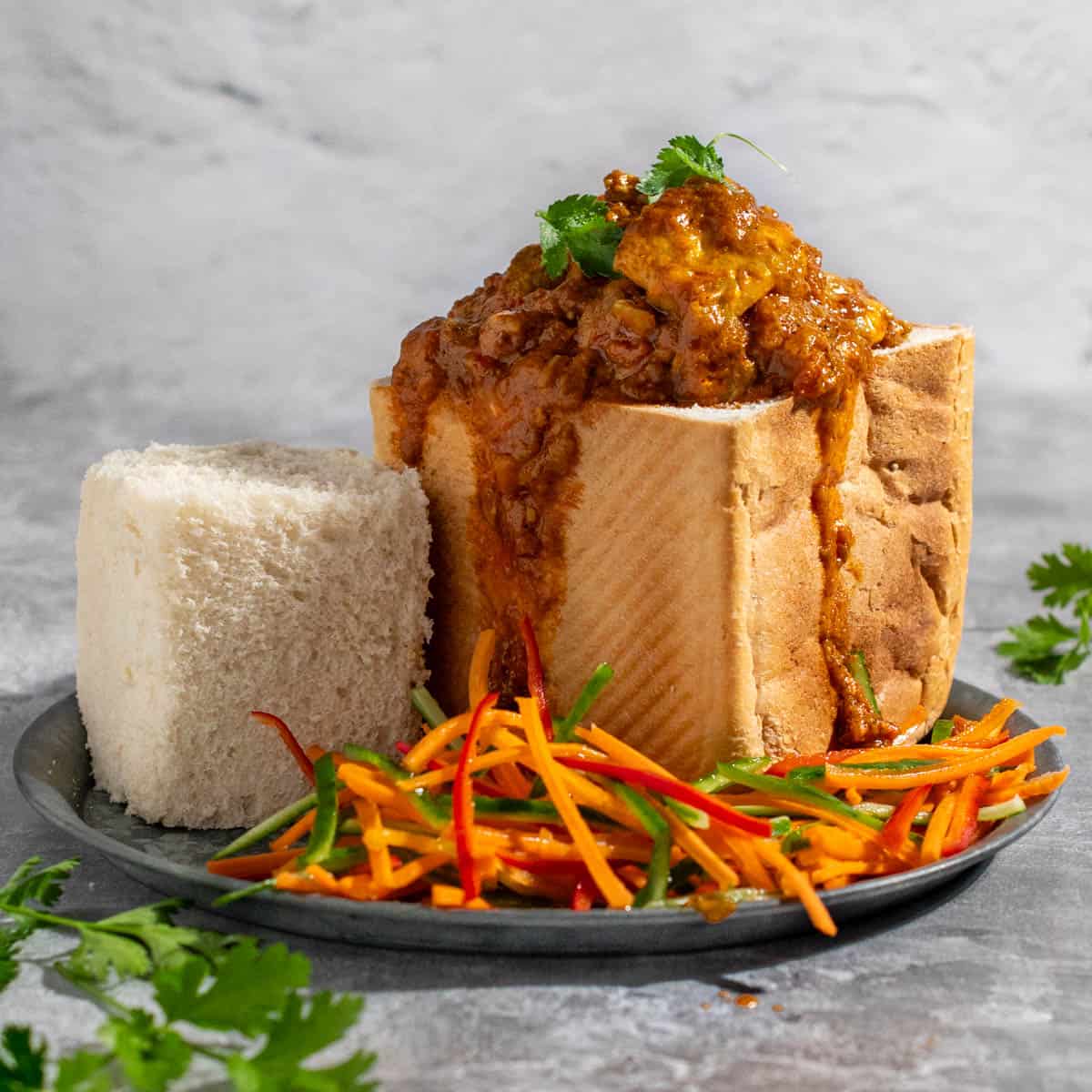
12. Spoon the hot curry into the bread bowls, top with fresh coriander and serve immediately with carrot sambal and the soft bread pieces on the side.
Troubleshooting bunny chow
My curry is too runny
Simmer it uncovered for a few more minutes until it thickens. A runny curry will soak through the bread too quickly.
My curry is too dry
Add a splash of water and simmer gently until the sauce loosens.
My bread went soggy
The curry may have been too thin, or the bunny was assembled too early. Fill the bread just before serving.
My curry tastes flat
It probably needs more salt, or a little more curry powder or masala. The filling should taste bold because the bread softens the flavour.
My curry is too spicy
Stir in a little yoghurt, cream or coconut milk, or serve with extra bread and carrot sambal.
I can't find Durban masala
Use mild or medium curry powder instead, then add chilli to taste.
What to serve with bunny chow
Traditionally, bunny chow is served with carrot sambal and the soft bread removed from the middle of the loaf. The sambal adds freshness and sharpness against the rich curry.
For a quick carrot sambal, mix grated or julienned carrot with a little finely chopped onion, chilli, vinegar, sugar and salt. Keep it bright and tangy rather than sweet.
You don't need many sides because the bread makes bunny chow very filling. A cold drink such as a Rock Shandy works beautifully alongside it.
Top tips
- Prep before you start - Measure the spices and chop the onions, garlic and ginger before heating the pan. Curry moves quickly once the spices go in.
- Make the curry ahead - The curry tastes even better the next day. Store the curry separately and fill the bread just before serving.
- Keep the curry thick - A thin curry will soak the bread too quickly. Simmer uncovered if it needs to reduce.
- Season properly - The curry should taste bold before it goes into the bread. The loaf will soften the flavour slightly.
Variations
Lamb bunny chow - Swap chicken for lamb, add 2-4 cloves and simmer 15-20 minutes longer, or until tender.
Chicken and potato bunny - Add peeled potato chunks with the chicken and simmer until tender.
Bean bunny - Use butter beans, kidney beans or chickpeas instead of chicken.
Vegetable bunny - Use potatoes, sweet potatoes, cauliflower, carrots or chickpeas.
Mini bunny chows - Use small square rolls or mini loaves for party portions.
Hotter bunny - Add fresh green chilli, cayenne or hot Durban masala.
Storage
Assembled bunny chow is best eaten straight away. Once the curry sits in the bread, it will keep soaking in and the bread can become soggy.
If you have leftovers, scoop the curry out of the bread and store it separately in an airtight container in the fridge for up to 3 days. Reheat the curry gently in the microwave or on the stove, then serve with fresh bread.
The curry on its own freezes well for up to 3 months. Defrost overnight in the fridge and reheat until piping hot.
Leftover curry is also lovely served with plain rice if you don't want to assemble more bread bowls.
More South African recipes
If you love South African curry flavours, try my Bobotie, curried mince for vetkoek or Beef trinchado.
For another classic South African favourite, my South African curry noodle salad is a popular make-ahead side for braais and family gatherings.
To finish with something sweet, try milk tart with condensed milk, foolproof South African pancakes, malva pudding, peppermint crisp tart or Romany Creams.
Recipe

Bunny Chow Recipe
Equipment
- 1 large saucepan with lid - a cast iron casserole is ideal
Ingredients
- 1 kilogram chicken thighs, diced - no skin, no bones
- 2 medium onions, diced - roughly 150g
- 2 tablespoons oil
- 2 cinnamon sticks
- 2 bay leaves
- 5 curry leaves - fresh or dried
- 1 teaspoon cumin seeds - or ½ teaspoon ground cumin
- 5 cardamom pods, crushed
- 4 teaspoons Durban masala or curry powder - heat level of choice
- 2 teaspoons garam masala
- 1 teaspoon turmeric
- 1 teaspoon ground coriander
- 2 teaspoons garlic, chopped - or garlic paste
- 2 teaspoons fresh ginger, chopped - or ginger paste
- 1 400g can chopped tomatoes
- 1 tablespoon sugar
- 1½ - 2 teaspoons salt
- 1½ - 2 cups water
- 2 unsliced sandwich loaves - square ends, also called 'government loaf'
- fresh coriander leaves for serving
Optional heat
- 1-2 green chillies - or a pinch of cayenne pepper or chilli flakes
Instructions
Making the chicken curry
- Dice the chicken thighs into generous bite-sized pieces and chop the onions.1 kilogram chicken thighs, diced, 2 medium onions, diced
- Heat the oil in a large saucepan over medium-high heat. Add the onions, cinnamon sticks, bay leaves, curry leaves, cumin seeds and crushed cardamom pods.2 tablespoons oil, 2 cinnamon sticks, 2 bay leaves, 5 curry leaves, 1 teaspoon cumin seeds, 5 cardamom pods, crushed
- Reduce the heat to medium and cook for about 5 minutes, stirring often, until the onions are soft, translucent and just starting to turn light golden.
- Add the Durban masala or curry powder, garam masala, turmeric, ground coriander, garlic and ginger. Cook for 1 minute, stirring and scraping the bottom of the pan so the spices don't burn. They will start to stick slightly, which is normal, but lower the heat if they catch too quickly.4 teaspoons Durban masala or curry powder, 2 teaspoons garam masala, 1 teaspoon turmeric, 1 teaspoon ground coriander, 2 teaspoons garlic, chopped, 2 teaspoons fresh ginger, chopped
- Add the tinned tomatoes and stir them into the spices. Cook for about 3 minutes, stirring and scraping often, until the tomato mixture thickens slightly and looks darker and richer. If it starts to catch, turn the heat down.1 400g can chopped tomatoes
- Add the salt and sugar and stir them through the sauce.1 tablespoon sugar, 1½ - 2 teaspoons salt
- Add the chicken pieces and stir until they are well coated in the sauce. Cook for 2-3 minutes.
- Add enough water to almost cover the chicken, but not fully cover it. Bring to a gentle simmer.1½ - 2 cups water
- Cover the pan with a lid and simmer over low heat for about 30 minutes, or until the chicken is tender. Stir occasionally to stop the curry from sticking.Check the consistency halfway through cooking. If the curry looks too saucy at the 15-minute mark, remove the lid and let some of the liquid evaporate. The curry should be thick enough to sit in the bread without flooding it, but saucy enough for dipping the torn bread pieces.
Prepare the bread bowl
- Slice the bread in half for a "half bunny", or into quarters for "quarter bunnies". This recipe makes two half bunnies or four quarter bunnies.2 unsliced sandwich loaves
- Using a sharp serrated knife, cut a square into each piece of bread to create a hollow, leaving a border of roughly 2cm around the sides and bottom. Don't cut all the way through the bottom. The base needs to stay intact so it can hold the curry.Gently ease out the soft bread from the middle. This piece is often called the "virgin" and is served on the side for dipping into the curry.
- Spoon the hot curry into the bread bowls, top with fresh coriander and serve immediately with carrot sambal and the soft bread pieces on the side.fresh coriander leaves for serving
Notes
- Use square-ended unsliced white loaves so each bread bowl has a sturdy base.
- The curry should be thick enough to sit in the bread but saucy enough for dipping.
- Use mild curry powder if you can't find Durban masala. Add chilli separately if you want more heat.
- Assemble just before serving. Store leftover curry separately from the bread.

**Nutritional data disclaimer**
Please keep in mind that the nutritional information provided below is calculated by a third party and we cannot guarantee the accuracy. We try our best to give you the most accurate information, but we do not take responsibility for errors that may be present. Also, the nutritional value of the recipe may change depending on the exact brands and products used. We recommend that you consult with a qualified healthcare professional or registered dietitian for personalised advice on your dietary needs.
Nutrition
For food safety advice, including guidance on food allergies



Hugo says
Perfect! This was such a hit with the family this weekend! The little curry we had left over was enjoyed with some rice. We're going to make it for friends on Saturday and will add a chilli or two, but as the recipe stands, it's perfect for the kids to enjoy too. Thanks for a great recipe!
Maretha Corbett says
Hey Hugo! I'm so pleased you enjoyed your bunny chow! Yes, the curry part is quite versatile and it's great to have with plain rice if you don't feel like the full blown bunny chow experience. Have a lovely time with your friends at the weekend and thanks for the lovely feedback 🙂
Maretha.
Stephany Geremia says
I made this today, it was really good! Thank you!
Maretha Corbett says
Hey Stephany,
So pleased you enjoyed the Bunny Chow! Thank you for the positive feedback, appreciated!
Maretha x
Serena Rumble says
Could you please recommend a recipe to make the Durban curry powder, I live in England and can’t find that specific blend of powder here.
Or a possible substitute?
Thanks you
Serena
Maretha Corbett says
Hi Serena,
You’re in luck! This recipe from Food like Amma Used to Make is a great guide for making your own Durban curry powder at home: https://foodlikeammausedtomakeit.info/2020/07/durban-masala-recipe/
Making your own spice blend is always a winner and really lets you adjust it to your taste. Just start carefully and tweak as you go - Durban flavours are bold, so a little goes a long way!
That said, if you don’t feel like going through all the trouble, you can absolutely use a mild or hot curry powder as a substitute in your bunny chow.
Hope this helps!
Maretha x
Moleboheng says
Thank u so much for share, the flavors of this bunny are so wholesome and re recipe is simple and easy to follow
Maretha Corbett says
Thank you so much, Moleboheng! I’m really happy you enjoyed the flavours and found the recipe easy to follow. Thank you for taking the time to let me know 😊
JJ says
This is an EXCELLENT recipe! I made it for some South African friends missing home and they said it was the BEST Durban curry they’d ever had…and I’m not even South African! Thank you so much for sharing this fantastic recipe! 5 out of 5 stars!!
Maretha Corbett says
Oh wow, JJ, what a compliment! Especially hearing that from South Africans who were missing a taste of home. I’m so happy the curry went down so well with everyone. Thank you so much for trying the recipe and for coming back to leave such a lovely review - you’ve made my day! 😊