

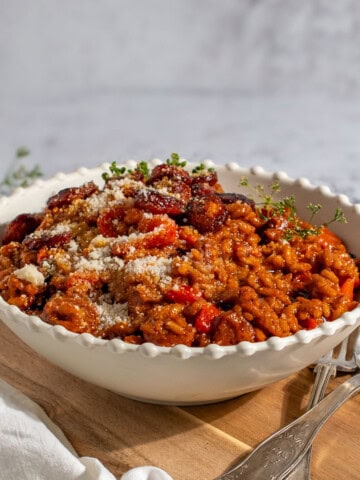
Lemon chicken orzo pasta is rich, creamy and full of layered flavour - comfort food with a little elegance.
Weeknight-friendly, with all the luxuries of something far more elaborate.
Our version starts with butter gently browned for a nutty, toasted base, then onions are slowly caramelised with a pinch of sugar until soft and golden. It's this foundation that adds real depth.

Jump to:
- Recipe highlights
- Recipes to try next...
- Key ingredient notes and substitutions
- IMPORTANT: A quick note on heat, pan size and common sense
- Step-by-step instructions
- Flavour enhancements and variations
- Serving suggestions and pairings
- Storage and reheating tips
- FAQs
- Recipe
- IMPORTANT: A quick note on heat, pan size and common sense
We use shredded rotisserie chicken (some of the skin too!) for ease and extra flavour.
The orzo simmers in a lemony cream sauce with garlic and broth. Then, a generous helping of Parmesan and fresh spinach stirred in at the end until just wilted.
We think you'll love it!
Recipe highlights
- Browned butter and caramelised onions for extra depth.
- Rotisserie chicken with a bit of crispy skin for flavour.
- Luxuriously creamy thanks to double cream.
- Generously cheesy with plenty of Parmesan.
- Ready in just over half an hour.
- Easy enough for weeknights, impressive enough for weekends.
Recipes to try next...
If you're in the mood for more creamy, comforting dinners, here are a few favourites to try next:
This creamy chicken orzo pasta bake is baked until golden and bubbling, while the creamy chicken and chorizo pasta has a smoky, spicy kick.
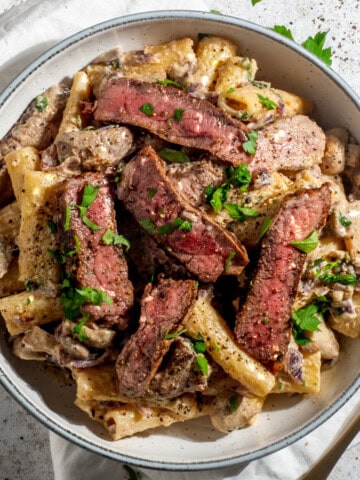
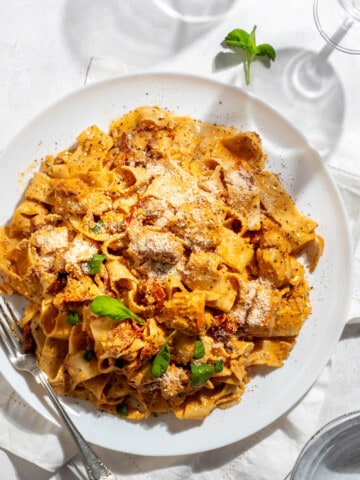
For something a little different, the creamy steak pasta with whisky sauce is rich and full of flavour, and the best marry me chicken pasta is every bit as irresistible as the name suggests. Short on time, try our 30-minute creamy salmon and pesto pasta.


Key ingredient notes and substitutions

Rotisserie chicken
A medium rotisserie chicken will give you around 3 to 4 cups of shredded meat.
We usually buy a ready-cooked chicken to keep things quick, but we've roasted whole chickens for this recipe before, too - it's entirely up to you.
We can't stress this enough: This is an indulgent dish, so we leave plenty of the crispy skin in the mix. It adds so much flavour, plus a bit of colour and texture. That said, if you'd rather leave it out, feel free.
Alternatively, any cooked chicken will work here; shredded or diced, breast or thigh, even leftovers from another meal.
Orzo
If you're not familiar, you may be asking - what is orzo pasta?!
It's a small, rice-shaped pasta that's actually made from wheat, just like any other pasta. It cooks quickly and soaks up flavour beautifully, making it perfect for one-pan dishes like this.
It's important to know that orzo isn't interchangeable with rice or other types of pasta.
The cooking time and amount of liquid in this recipe are designed specifically for orzo, so it's best not to substitute it unless you're comfortable adjusting things significantly. Otherwise, it may not turn out as intended.
Heavy cream
We use heavy cream (also called double cream) because it gives the sauce that rich, velvety texture.
And crucially, it holds up to heat.
Thinner creams, like single cream or half-and-half, are more likely to split or curdle when simmered, especially with the lemon juice in the mix.
If you can, stick to double cream for a smooth, indulgent finish. If you're in a pinch, full-fat crème fraîche is a more stable alternative.
IMPORTANT: A quick note on heat, pan size and common sense
- Stove tops vary - your "low" might be hotter than ours. Move to a smaller burner if you have to.
- A wide pan with a large surface area lets liquid evaporate faster than a smaller one.
- Use your judgement, especially when caramelising the onions and simmering the orzo.
- If the liquid is evaporating too quickly before the orzo is tender, lower the heat or move to a smaller burner. Add a splash of cream or broth if needed.
- You can even place the lid on briefly to help trap some moisture.
- If things still aren't saucy enough after adding the parmesan at the end, don't panic. Just stir in a little more cream and you're back on track.
- Don't stress - just keep an eye on it and adjust as you go.
Step-by-step instructions

1. Melt the butter over medium heat until it turns golden and releases a nutty aroma - about 3-4 minutes. You'll notice it foams and the milk solids begin to brown (little golden specs appear).
As soon as it's browned, lower the heat and stir in the olive oil to prevent burning.
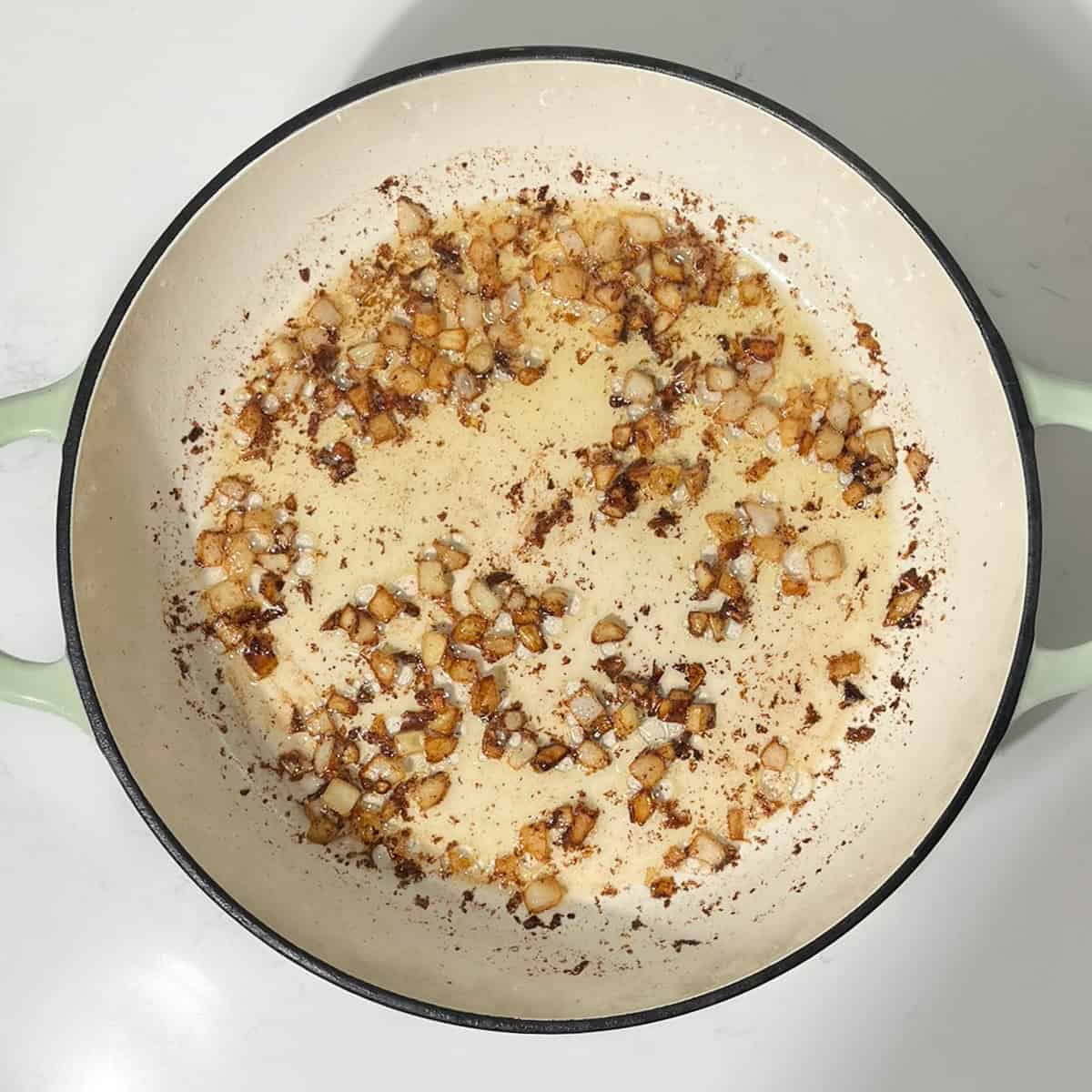
2. Add the onions and a pinch of sugar. Cook slowly over low heat for about 5-7 minutes until the onions are soft and beautifully golden.

3. Add the garlic, Italian seasoning, nutmeg and black pepper. Sauté for 30 seconds to bloom the flavours.

4. Add the orzo to the pan and stir it through the onions for 1-2 minutes over low heat. This lightly toasts the orzo, adding a warm, nutty flavour and helping it hold its texture.
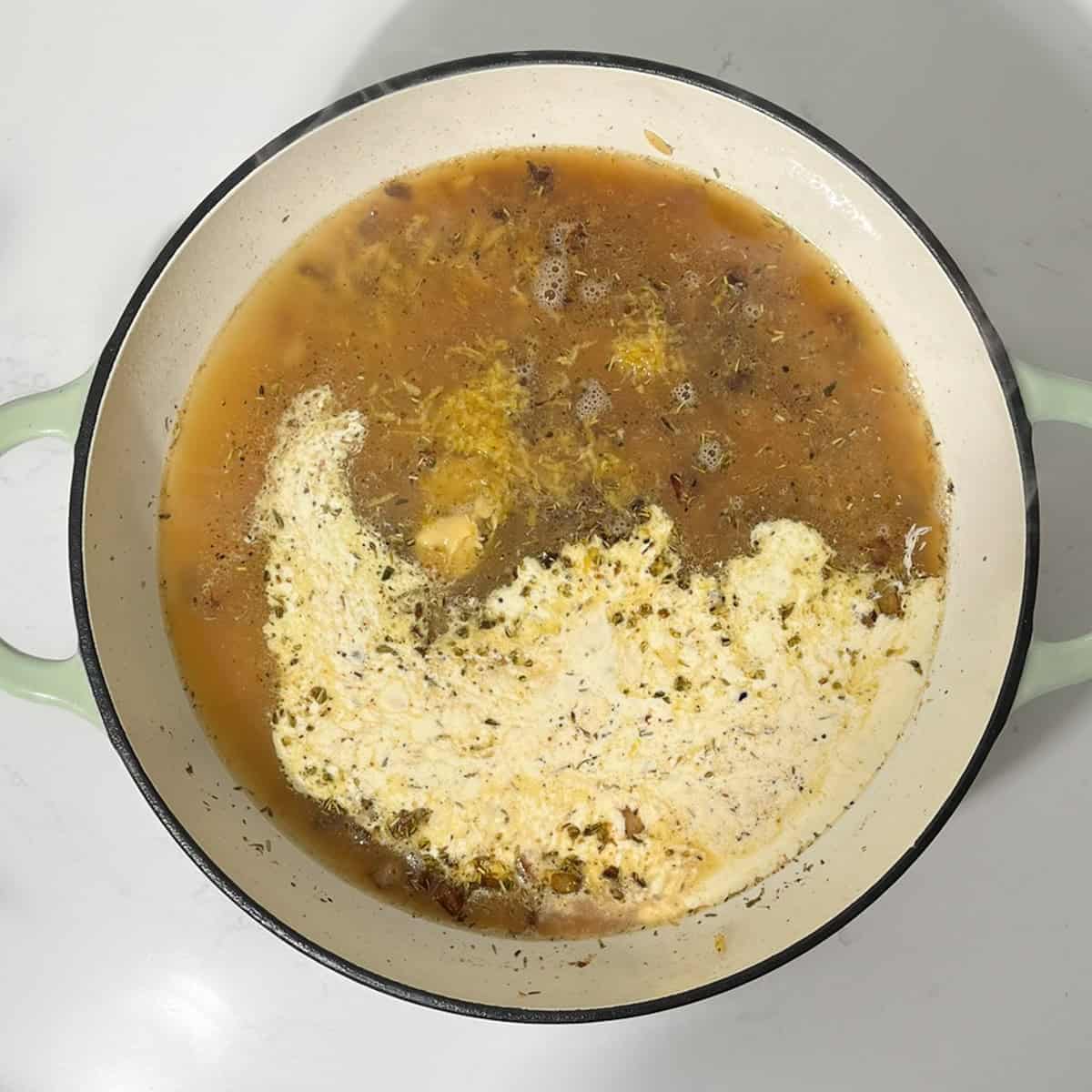
5. Pour in the chicken broth, cream, lemon zest and Dijon mustard. Stir everything together and bring to a light simmer.

6. Let everything simmer gently, uncovered, for 8-10 minutes, stirring VERY often to prevent the orzo from sticking to the pan.
Keep an eye on the heat and the liquid - if it's evaporating too quickly, lower the heat or move to a smaller burner. Add more broth or cream if needed.
If the orzo isn't fully cooked after 10 minutes, cook for a few more minutes. You can also place the lid on to help trap moisture.
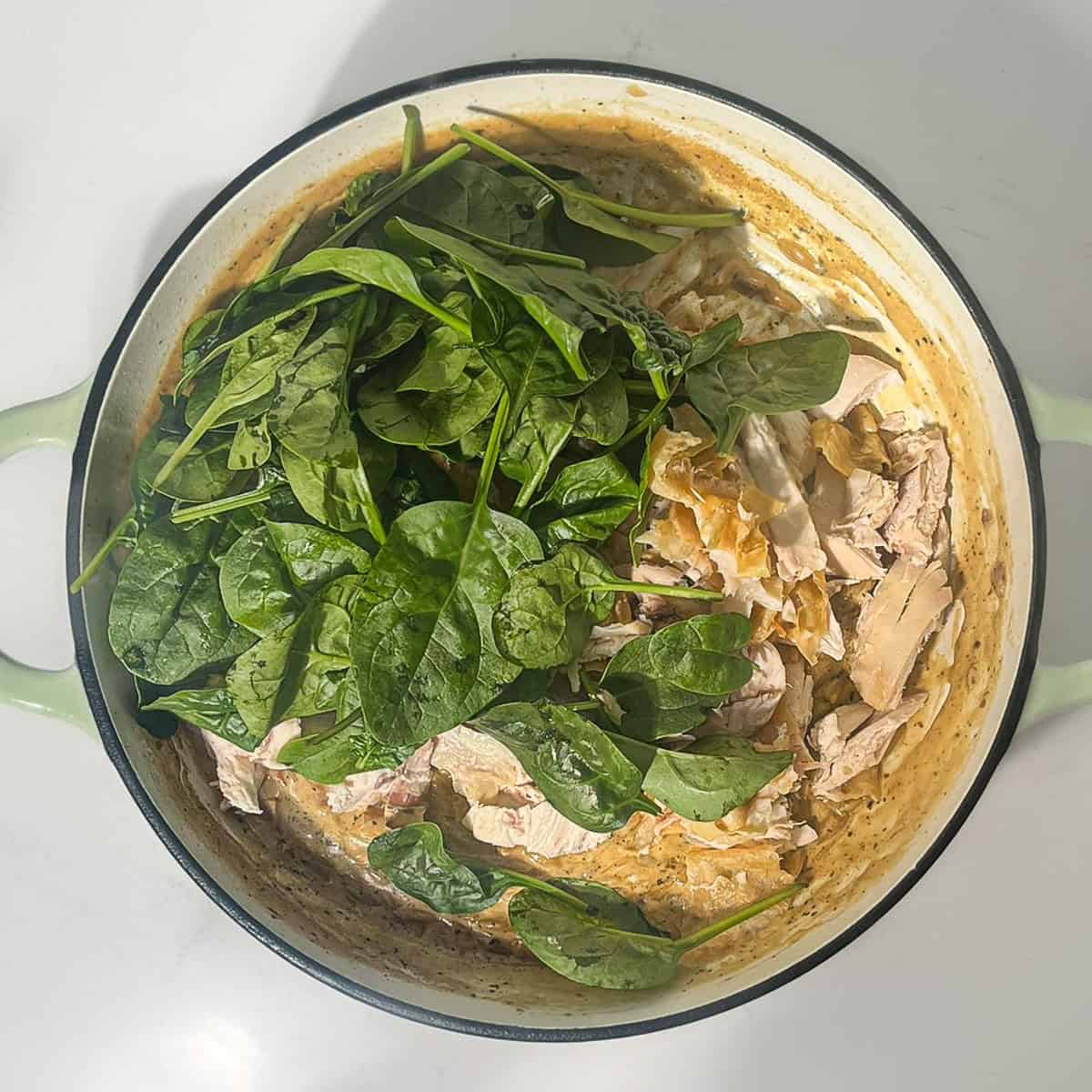
7. Stir in the spinach and shredded chicken. Cook for 2 minutes until the spinach wilts and the chicken is warmed through. Remove from the heat.
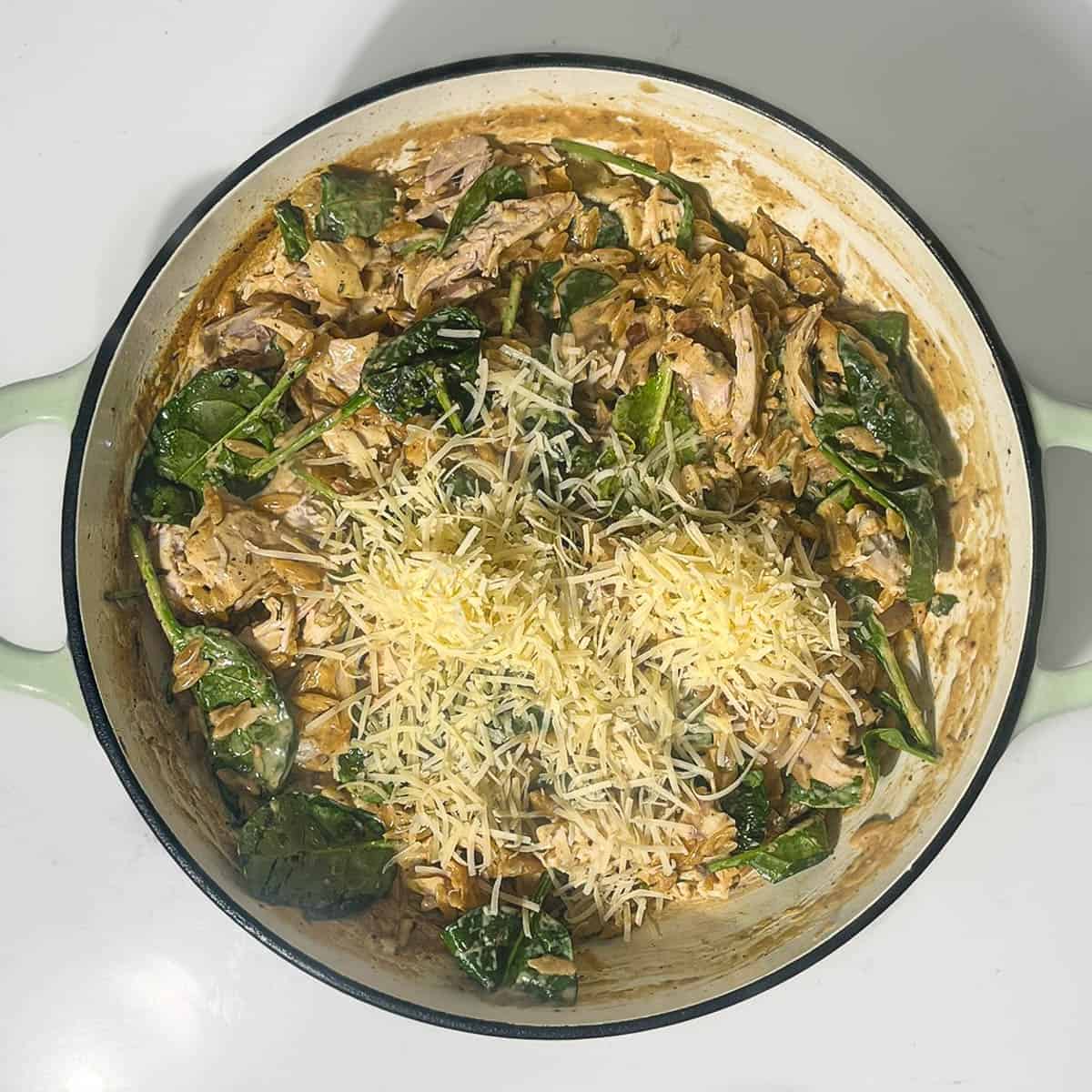
8. Stir in the parmesan and lemon juice. Taste and add salt if needed. Feel free to squeeze in more lemon juice if you want a brighter, zestier finish.
If the sauce isn't as creamy as you like, add a splash more cream until it reaches your desired consistency.
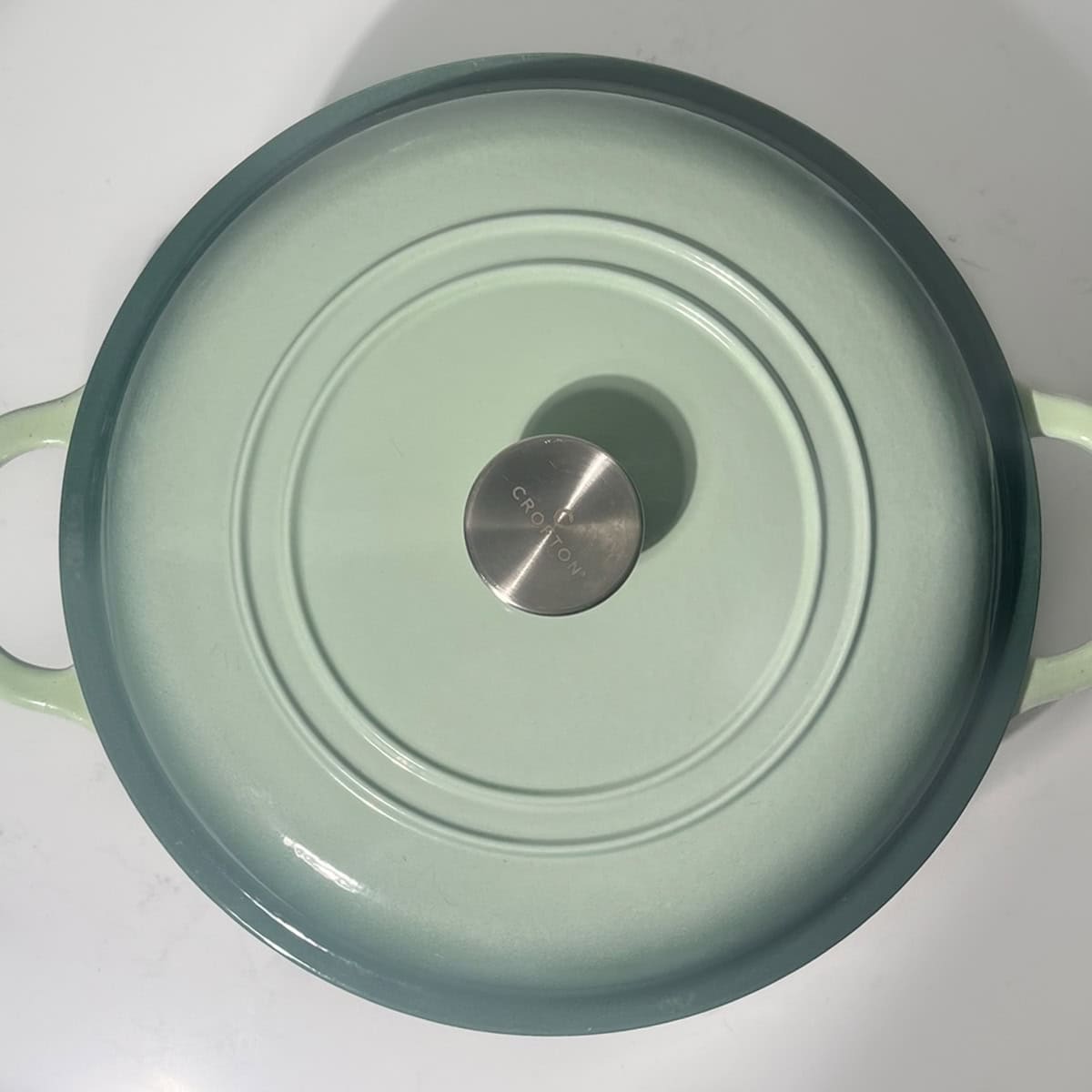
9. Cover the pot with a tight-fitting lid and let it sit for 10 minutes. This allows the flavours to meld and the orzo to absorb any remaining sauce.

10. Serve warm with lemon slices, a generous grinding of black pepper and a good helping of extra Parmesan scattered over the top.
Flavour enhancements and variations
This lemon chicken orzo pasta is indulgent as-is, but if you like to make it your own, here are a few ways to play:
Herb additions:
Fresh basil, parsley or dill all pair beautifully with the lemony sauce. Stir in a handful of chopped herbs just before serving for extra colour and brightness.
Spice adjustments:
Want a little heat? Add a pinch of red pepper flakes or a dash of chilli oil when sautéing the garlic. A touch of smoked paprika or a hint of cayenne also works well.
Cheese alternatives:
Parmesan brings saltiness and depth, but you can switch it up. Pecorino adds a sharper bite.
Mediterranean twist:
For something a little sunnier, stir in chopped sun-dried tomatoes and Kalamata olives with the spinach and chicken. A sprinkle of feta on top wouldn't hurt either.
Serving suggestions and pairings
Side dishes:
This is a hearty one-pot meal, but if you want to round it out:
- Salads - like this caprese salad with hot honey dressing, nectarine salad with basil dressing or a Panzanella salad will help balance the rich flavours nicely.
- Roasted vegetables - like tenderstem broccoli or balsamic-glazed carrots add colour and extra texture.
- Garlic bread or crusty sourdough - perfect for mopping up any leftover sauce.
Beverages
You don't need anything fancy, but a good pairing lifts everything:
- White wine like a chilled Sauvignon Blanc or Vermentino cuts through the cream beautifully.
- For non-drinkers, sparkling water with lemon slices keeps it fresh.
- Or, a glass of lightly brewed iced tea with citrus and mint.
Garnishes
A final flourish always helps and adds that "restaurant-at-home" touch:
- A handful of fresh parsley or basil, chopped just before serving.
- A little more grated parmesan never hurts.
- Cracked black pepper and a final squeeze of lemon to brighten everything up.
Storage and reheating tips
This lemon chicken orzo pasta keeps well, so it's a great option for making ahead or enjoying leftovers.
Refrigeration:
Store in an airtight container in the fridge for up to 3 days. The sauce will thicken as it cools, but that's easy to fix when reheating. See below.
Freezing:
Freezing isn't ideal for cream-based pasta dishes. The texture may change and the sauce can split.
If you must, freeze in individual portions and reheat gently with added cream or broth.
Reheating Methods:
- Stovetop: Reheat gently over low heat with a splash of broth, cream or water to loosen the sauce. Stir often to prevent sticking.
- Microwave: Heat in 30-second bursts, stirring in between and adding a splash of liquid if needed.
FAQs
No. The cooking time and amount of liquid in this recipe are designed specifically for orzo, so it's best not to substitute it unless you're comfortable adjusting things significantly. Otherwise, it may not turn out as intended.
Absolutely. Prepare the dish as directed, cool completely, and store in an airtight container in the fridge for up to three days. Reheat with a splash of broth to restore creaminess.
Yes, you can use boneless, skinless chicken breasts. Cook them thoroughly before adding to the dish. However, using rotisserie chicken, including some crispy skin, adds depth of flavour and saves time.
Spinach is commonly used, but you can also add or substitute with vegetables like broccoli, mushrooms, or zucchini. Ensure they are cooked appropriately to maintain the desired texture.
Absolutely. Omit the chicken and use vegetable broth instead of chicken broth. You can add hearty vegetables like mushrooms or chickpeas for added substance.
Yes, a pinch of red pepper flakes or a dash of chili oil can add a subtle heat to the dish.
Recipe

Creamy Lemon Chicken Orzo Pasta (One-Pot Recipe)
Equipment
- large lidded saucepan or deep frying pan
Ingredients
- 2 tablespoons (1 oz/30g) butter
- 1 tablespoon olive oil - or other cooking oil
- ½ cup (125ml) onion, diced - roughly half a large onion
- ½ teaspoon sugar
- 2 teaspoons garlic paste - or four cloves, minced
- 1½ teaspoons Italian herbs
- good pinch of ground nutmeg
- ½ teaspoon cracked black pepper - and more for serving
- 1 cup (250ml) orzo
- 2 cups (500ml) chicken broth
- 1 cup (250ml) heavy cream - or double cream
- 1 tablespoon lemon zest - roughly one large lemon
- 1 teaspoon Dijon mustard
- 3 cups (750ml) spinach
- 3 cups (750ml) rotisserie chicken, shredded or cubed - we add some crispy skin in the mix!
- ¾ cup (180ml) parmesan cheese, grated - and more for serving
- 2 tablespoons fresh lemon juice
- salt to taste
Instructions
- Melt the butter over medium heat until it turns golden and releases a nutty aroma - about 3-4 minutes. You'll notice it foams and the milk solids begin to brown (little golden specs appear).As soon as it's browned, lower the heat and stir in the olive oil to prevent burning.2 tablespoons (1 oz/30g) butter, 1 tablespoon olive oil
- Add the onions and a pinch of sugar. Cook slowly over low heat for about 5-7 minutes until the onions are soft and beautifully golden.½ cup (125ml) onion, diced, ½ teaspoon sugar
- Add the garlic, Italian herbs, nutmeg and black pepper. Sauté for 30 seconds to bloom the flavours.2 teaspoons garlic paste, 1½ teaspoons Italian herbs, good pinch of ground nutmeg, ½ teaspoon cracked black pepper
- Add the orzo to the pan and stir it through the onions for 1-2 minutes over low heat. This lightly toasts the orzo, adding a warm, nutty flavour and helping it hold its texture.1 cup (250ml) orzo
- Pour in the chicken broth, cream, lemon zest and Dijon mustard. Stir everything together and bring to a light simmer.2 cups (500ml) chicken broth, 1 cup (250ml) heavy cream, 1 tablespoon lemon zest, 1 teaspoon Dijon mustard
- Let everything simmer gently, uncovered, for 8-10 minutes, stirring VERY often to prevent the orzo from sticking to the pan.Keep an eye on the heat and the liquid - if it's evaporating too quickly, lower the heat or move to a smaller burner. Add more broth or cream if needed. If the orzo isn't fully cooked after 10 minutes, cook for a few more minutes. You can also place the lid on to help trap moisture.
- Stir in the spinach and shredded chicken. Cook for 2 minutes until the spinach wilts and the chicken is warmed through. Remove from the heat.3 cups (750ml) spinach , 3 cups (750ml) rotisserie chicken, shredded or cubed
- Stir in the parmesan and lemon juice. Taste and add salt if needed. Feel free to squeeze in more lemon juice if you want a brighter, zestier finish.If the sauce isn't as creamy as you like, add a splash more cream until it reaches your desired consistency.¾ cup (180ml) parmesan cheese, grated, 2 tablespoons fresh lemon juice, salt to taste
- Cover the pot with a tight-fitting lid and let it sit for 10 minutes. This allows the flavours to meld and the orzo to absorb any remaining sauce.
- Serve warm with lemon slices, a generous grinding of black pepper and a good helping of extra Parmesan scattered over the top.
Notes
IMPORTANT: A quick note on heat, pan size and common sense
- Stove tops vary - your "low" might be hotter than ours.
- A wide pan with a large surface area lets liquid evaporate faster than a smaller one.
- Use your judgement, especially when caramelising the onions and simmering the orzo.
- If the liquid is evaporating too quickly before the orzo is tender, lower the heat or move to a smaller burner. Add a splash of cream or broth if needed.
- You can even place the lid on briefly to help trap some moisture.
- If things still aren't saucy enough after adding the parmesan at the end, don't panic. Just stir in a little more cream and you're back on track.
- Don't stress - just keep an eye on it and adjust as you go.

**Nutritional data disclaimer**
Please keep in mind that the nutritional information provided below is calculated by a third party and we cannot guarantee the accuracy. We try our best to give you the most accurate information, but we do not take responsibility for errors that may be present. Also, the nutritional value of the recipe may change depending on the exact brands and products used. We recommend that you consult with a qualified healthcare professional or registered dietitian for personalised advice on your dietary needs.
Nutrition
For food safety advice, including guidance on food allergies


Leave a Reply