These easy cruffins are made with canned croissant dough/crescent roll dough, softened butter and cinnamon sugar. They bake in a standard muffin tin until golden, flaky and sticky at the edges, then get rolled in cinnamon sugar while still warm.
This is a shortcut cruffin recipe, not a full laminated pastry project, which is exactly the point. Use Jus-Rol in the UK or Pillsbury-style crescent roll dough in the US, and you can have buttery cinnamon-sugar cruffins ready in about 35 minutes.
If your dough comes perforated into triangles, keep two triangles joined to make a square and pinch any gaps closed. That little detail gives you neater layers and fewer cinnamon-sugar leaks.

Updated in July 2026 with clearer crescent roll dough/Jus-Rol guidance, extra shaping cues, filling ideas and storage tips.
Why this recipe works
- No laminating, proving or pastry faff.
- Bakes in a standard muffin tin.
- Flaky layers from a simple roll-slice-spiral method.
- Easy to adapt with different fillings.
Key ingredient notes and substitutions
You’ll find the full ingredient list with measurements in the recipe card at the bottom of the post.

Canned croissant/crescent roll dough
This is the shortcut ingredient that makes the recipe quick. In the UK, Jus-Rol canned croissant dough usually gives 6 rolls per can, so you’ll need 2 cans for 12 cruffins.
In the US, look for Pillsbury-style crescent roll dough or crescent dough sheets. Brand sizes vary, so the key is to use enough dough for 12 croissant/crescent rolls.
Butter
Use softened butter that spreads easily. Fridge-cold butter can tear the dough, while melted butter is more likely to run out and make the cruffins greasy or sticky underneath.
Cinnamon sugar
The filling uses white sugar, light brown sugar and cinnamon. The brown sugar gives a gentle caramel note, while the white sugar keeps the texture lighter.
For rolling the baked cruffins, white sugar works best because it sticks neatly and gives that classic cinnamon-sugar finish.
If using puff pastry
Puff pastry can work if canned croissant or crescent dough is hard to find, but the texture will be crisper and less soft inside. Keep it cold, roll it gently and expect a slightly different result.
Before you start
Brands vary, so don’t worry if your dough looks slightly different from mine. This recipe is based on Jus-Rol canned croissant dough, where two joined triangles make one rough square.
You need enough dough to make 12 croissant/crescent rolls in total. In the UK, that is usually 2 cans of Jus-Rol. In the US, it may be 2–3 cans depending on the brand and size.
If your dough pieces are smaller, don’t force them to 30cm x 25cm. Roll them only slightly larger than they were when they came out of the can. Very thin dough tears more easily and can bake dry.
If you use crescent dough sheets, cut them into rectangles, then continue with the butter, cinnamon sugar, rolling and slicing.
Method

Step 1: Preheat the oven to 180°C/350°F. Lightly grease a 12-hole muffin tin well, including the top edges, as the cinnamon sugar can bubble up and stick.

Step 2: In a small bowl, mix the white sugar, light brown sugar and cinnamon for the filling. Set aside.

Step 3: Unroll the dough and cut it into squares along the perforated lines between each pair of triangles. Instead of separating every triangle, keep two triangles joined together to form one rough square.

Step 4: On a lightly floured surface, gently roll each square into a slightly larger rectangle. Aim for about 30cm x 25cm/12″ x 9″ if using Jus-Rol dough, but don’t force smaller brands to stretch that far.

Step 5: Pinch any large perforated gaps closed with your fingertips. It doesn’t need to look perfect, but closing the bigger gaps helps keep the butter and cinnamon sugar inside.

Step 6: Spread about 1 tablespoon of softened butter over the dough, right up to the edges. The butter should glide over the dough; if it drags or tears, leave it to soften for a few more minutes.

Step 7: Sprinkle about 2 tablespoons of cinnamon sugar evenly over the butter. Try to cover the surface without piling it on too thickly, or it may leak out as the cruffins bake.

Step 8: Starting from the long side, roll the dough into a fairly tight log. Don’t squeeze it flat; you want the layers to stay visible.

Step 9: Use a sharp knife to slice the log in half lengthways. You should see the butter and cinnamon-sugar layers running through the middle.


Step 10: With the cut layers facing upwards, roll each strip into a tight spiral. Tuck the loose end underneath so it doesn’t unravel in the oven.

Step 11: Place each spiral into the prepared muffin tin. Repeat with the remaining dough.

Step 12: Bake for 18–20 minutes, or until the cruffins are puffed, flaky and deep golden on top. The edges should look caramelised and the centres should no longer look pale or doughy.
Step 13: Leave them in the tin for 5 minutes, then loosen the edges with a knife and carefully lift them out. Don’t leave them too long, or the sticky sugar can set like edible glue. Delicious glue, but still glue.

Step 14: Mix the white sugar and cinnamon for rolling. While the cruffins are still warm, roll them in the cinnamon sugar, tap off the excess and leave them on a cooling rack.
Cruffin filling ideas
Spread onto the dough before rolling:
- Nutella or chocolate spread
- Finely chopped nuts and chocolate chips
- Jam, used lightly
- Raisins or chopped apricots with cinnamon sugar
- Lemon zest and sugar
- Caramel sauce and chopped pecans
- Garlic butter
- Garlic butter and Cheddar
- Ham and cheese
- Cheese and bacon
For savoury cruffins, leave out the cinnamon sugar and skip the final sugar coating.
Pipe into baked cruffins
Use a straw to create a hole in each Cruffin, then fill a piping bag with any of the below fillings to pipe into the middle of the Cruffin.
- Crème pâtissière/thick custard
- Mascarpone cream
- Marshmallow fluff
- Nutella
- Lemon curd
- Dulce de leche
- Cream cheese filling
Can I make these into mini cruffins?
Yes. Use a mini muffin tin and make smaller spirals from the rolled dough. They will bake faster than full-size cruffins, so start checking early and take them out once they’re puffed, golden and cooked through in the middle.
Leftover cinnamon sugar
Store leftover cinnamon sugar in an airtight jar and use it on pancakes, French toast, porridge, popcorn, baked apples or buttered toast. If it has touched raw dough or buttery fingers, don’t store it; sprinkle it over the baked cruffins instead.
Storage
Cruffins are best eaten fresh, while the edges are crisp and the cinnamon sugar is still a little crunchy.
Store cooled cruffins in an airtight container at room temperature for up to 2 days. I’d avoid the fridge unless you really need to keep them longer, as it can make the pastry denser and less flaky.
To refresh them, warm in a 180°C/350°F oven for about 5 minutes. The microwave works for 10–15 seconds if you’re in a hurry, but it will soften the pastry rather than crisp it.
To freeze, let the cruffins cool completely, wrap individually and freeze for up to 2 months. Thaw at room temperature, then warm briefly in the oven before serving. Add a fresh sprinkle of cinnamon sugar if needed.
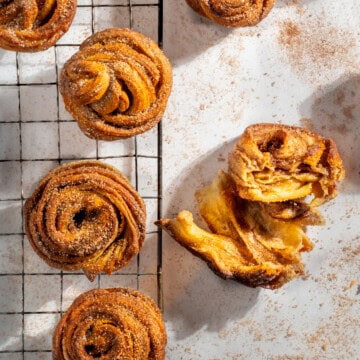
Easy Cruffins with Crescent Roll Dough
Equipment
- 1 12-hole muffin pan
Ingredients
For the cruffins
- 5 tablespoons white sugar
- 5 tablespoons light brown sugar
- 2 tablespoons ground cinnamon
- 2 cans croissant/crescent roll dough, or enough for 12 rolls (Jus-Rol in the UK, Pillsbury-style crescent dough in the US)
- 6 tablespoons butter, softened roughly 90g/3 oz
For rolling
- 10 tablespoons white sugar
- 1 tablespoon ground cinnamon
Instructions
- Preheat the oven to 180°C/350°F. Lightly grease a 12-hole muffin tin well, including the top edges, as the cinnamon sugar can bubble up and stick.
- In a small bowl, mix the white sugar, light brown sugar and cinnamon for the filling. Set aside.5 tablespoons white sugar, 5 tablespoons light brown sugar, 2 tablespoons ground cinnamon
- Unroll the dough and cut it into squares along the perforated lines between each pair of triangles. Instead of separating every triangle, keep two triangles joined together to form one rough square.2 cans croissant/crescent roll dough, or enough for 12 rolls
- On a lightly floured surface, gently roll each square into a slightly larger rectangle. Aim for about 30cm x 25cm/12" x 9" if using Jus-Rol dough, but don’t force smaller brands to stretch that far.
- Pinch any large perforated gaps closed with your fingertips. It doesn’t need to look perfect, but closing the bigger gaps helps keep the butter and cinnamon sugar inside.
- Spread about 1 tablespoon of softened butter over the dough, right up to the edges. The butter should glide over the dough; if it drags or tears, leave it to soften for a few more minutes.6 tablespoons butter, softened
- Sprinkle about 2 tablespoons of cinnamon sugar evenly over the butter. Try to cover the surface without piling it on too thickly, or it may leak out as the cruffins bake.
- Starting from the long side, roll the dough into a fairly tight log. Don’t squeeze it flat; you want the layers to stay visible.
- Use a sharp knife to slice the log in half lengthways. You should see the butter and cinnamon-sugar layers running through the middle.
- With the cut layers facing upwards, roll each strip into a tight spiral. Tuck the loose end underneath so it doesn’t unravel in the oven.
- Place each spiral into the prepared muffin tin. Repeat with the remaining dough.
- Bake for 18–20 minutes, or until the cruffins are puffed, flaky and deep golden on top. The edges should look caramelised and the centres should no longer look pale or doughy.
- Leave them in the tin for 5 minutes, then loosen the edges with a knife and carefully lift them out. Don’t leave them too long, or the sticky sugar can set like edible glue. Delicious glue, but still glue.
- Mix the white sugar and cinnamon for rolling. While the cruffins are still warm, roll them in the cinnamon sugar, tap off the excess and leave them on a cooling rack.10 tablespoons white sugar, 1 tablespoon ground cinnamon
Notes
- Brand sizes vary. Use enough dough for 12 croissant/crescent rolls in total.
- Roll the dough only slightly larger than it comes out of the can. If it is too thin, it can tear or bake dry.
- Use softened butter, not melted or fridge-hard butter.
- Remove the cruffins from the tin after 5 minutes, before the sticky sugar sets around the edges.
- Best eaten fresh, but they can be refreshed in a 180°C/350°F oven for about 5 minutes.
Nutrition
For food safety advice, including guidance on food allergies