

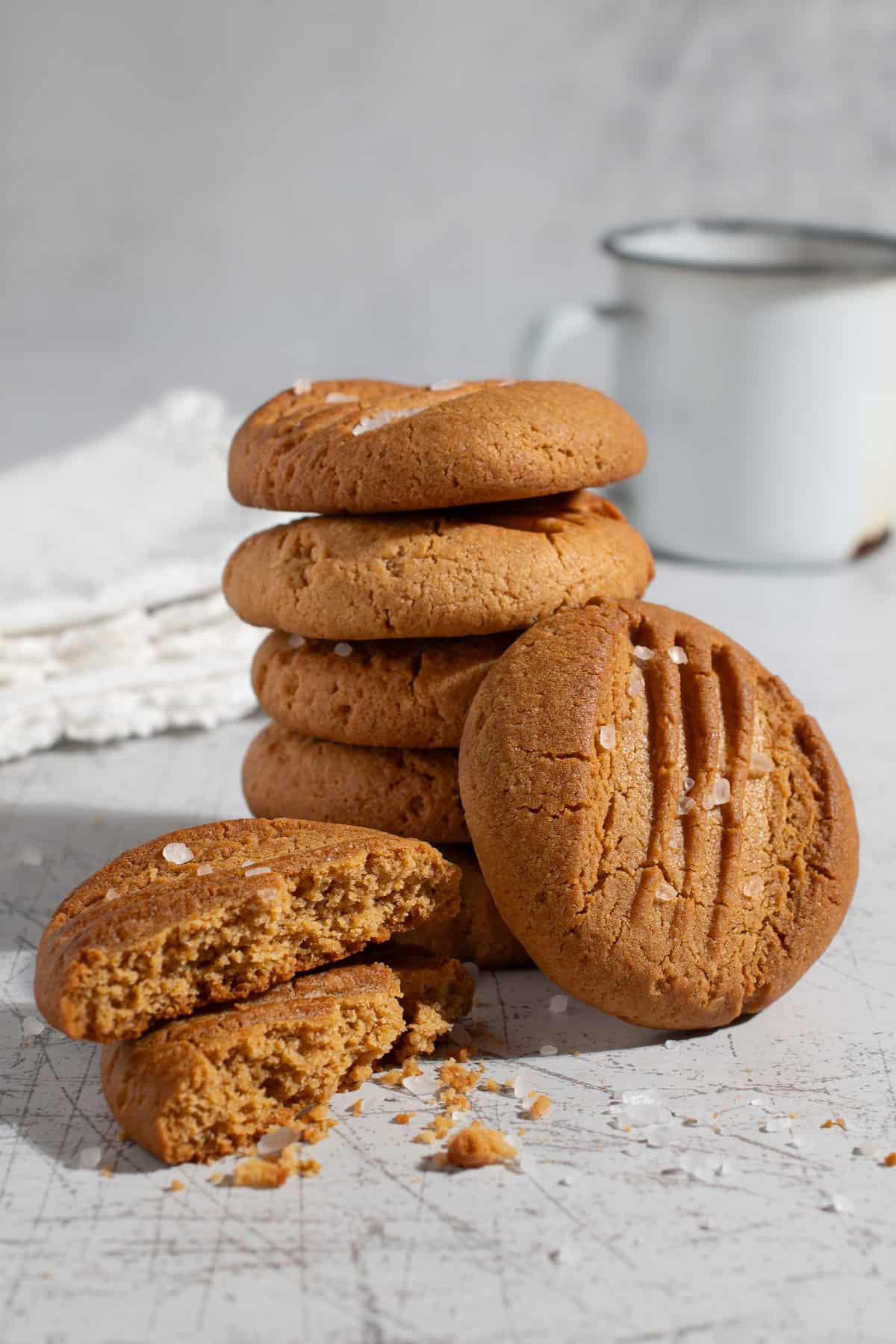
These caramel condensed milk cookies are a twist on South African condensed milk cookies, or kondensmelk koekies.
Made with thick caramelised condensed milk, such as Carnation Caramel or Caramel Treat, they have lightly crisp edges, a tender, slightly crumbly centre and a gentle caramel flavour.
A light sprinkle of sea salt before baking balances the sweetness.
Jump to:
Recipe at a glance
- Makes: About 30 cookies
- Preparation: 15 minutes
- Chilling: At least 30 minutes
- Baking: 14-15 minutes per tray
- Texture: Lightly crisp around the edges, with a tender, slightly crumbly centre
- Flavour: Buttery caramel with an optional light sea-salt finish
Why this recipe works
- Caramel flavour. Caramelised condensed milk adds sweetness, colour and a gentle caramel taste.
- Easy to shape. Chilling firms the soft dough so it rolls and presses neatly.
- Tender texture. Cornflour keeps the crumb soft and delicate.
- Salted finish. A light sprinkle of sea salt balances the sweetness.
Ingredient notes
You'll find the full ingredient list with measurements in the recipe card at the bottom of the post.
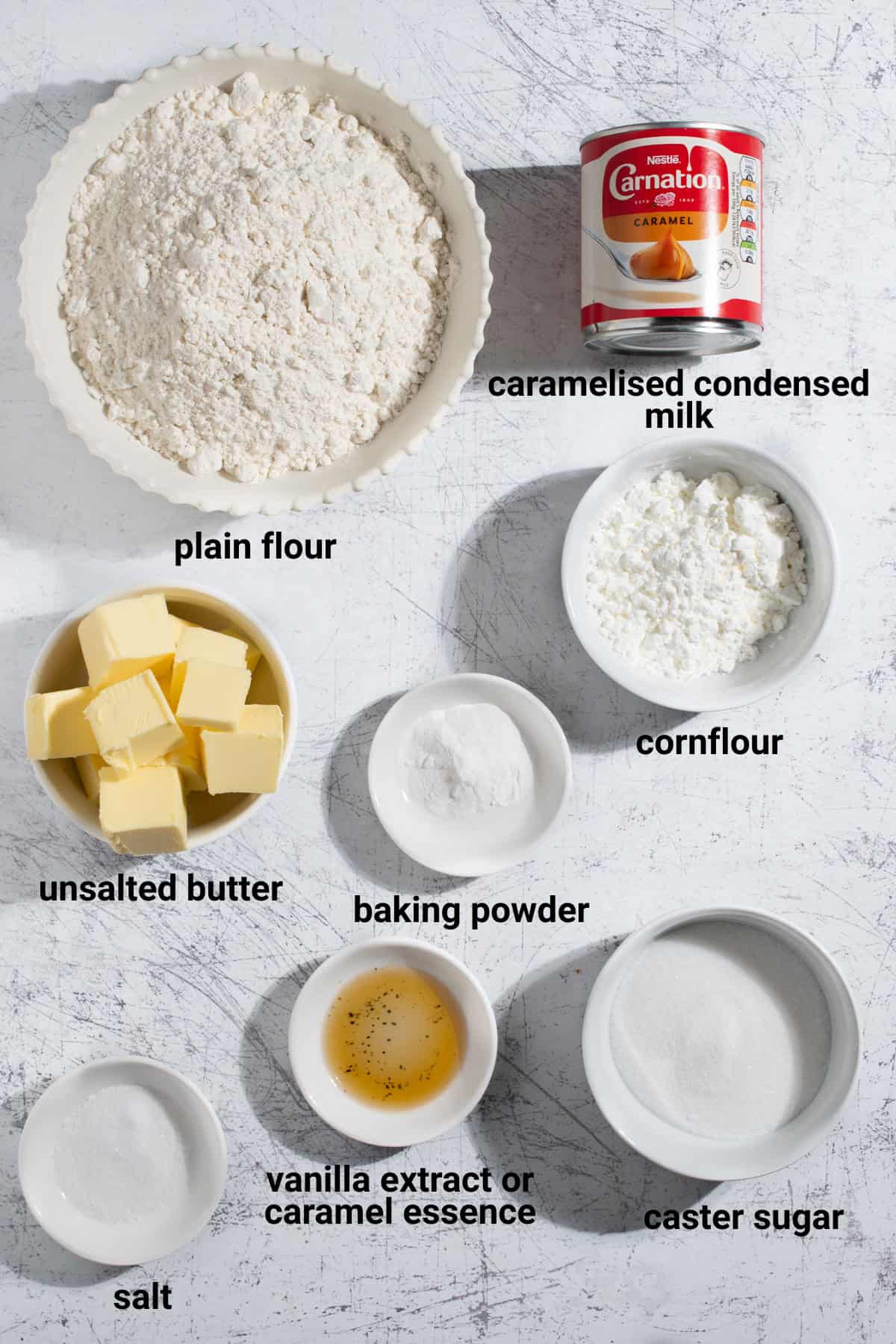
Caramelised condensed milk
I developed this recipe with Carnation Caramel. In South Africa, Nestlé Caramel Treat is the closest equivalent. A thick dulce de leche can also be used.
Whichever one you choose, it should be thick and spoonable. Do not use ordinary condensed milk or a thin pourable caramel sauce. Both would change the moisture and sweetness of the dough.
Butter and salt
The butter should be softened enough to beat smoothly, but it must not be shiny, greasy or starting to melt. Your finger should leave an easy indentation when pressed into it.
I tested the cookies with unsalted butter and ½ teaspoon fine salt. If you are using salted butter, reduce the added fine salt to ¼ teaspoon.
The coarse or flaky sea salt sprinkled over the shaped cookies is separate. Keep it very light. A few grains on each cookie are enough.
Vanilla or caramel essence
Use 1 teaspoon vanilla extract for a softer, rounded caramel flavour, or replace it with 1 teaspoon standard caramel essence for a more pronounced old-fashioned caramel-biscuit flavour.
I tested the batch with vanilla. If your caramel flavouring is highly concentrated rather than an ordinary baking essence, follow the quantity recommended on the bottle.
Plain flour and cornflour
Cornflour in the UK and South Africa is called cornstarch in the US. It is the fine white starch, not cornmeal or maize meal.
It softens the crumb and helps prevent the cookies from becoming too bread-like.
How to make caramel condensed milk cookies
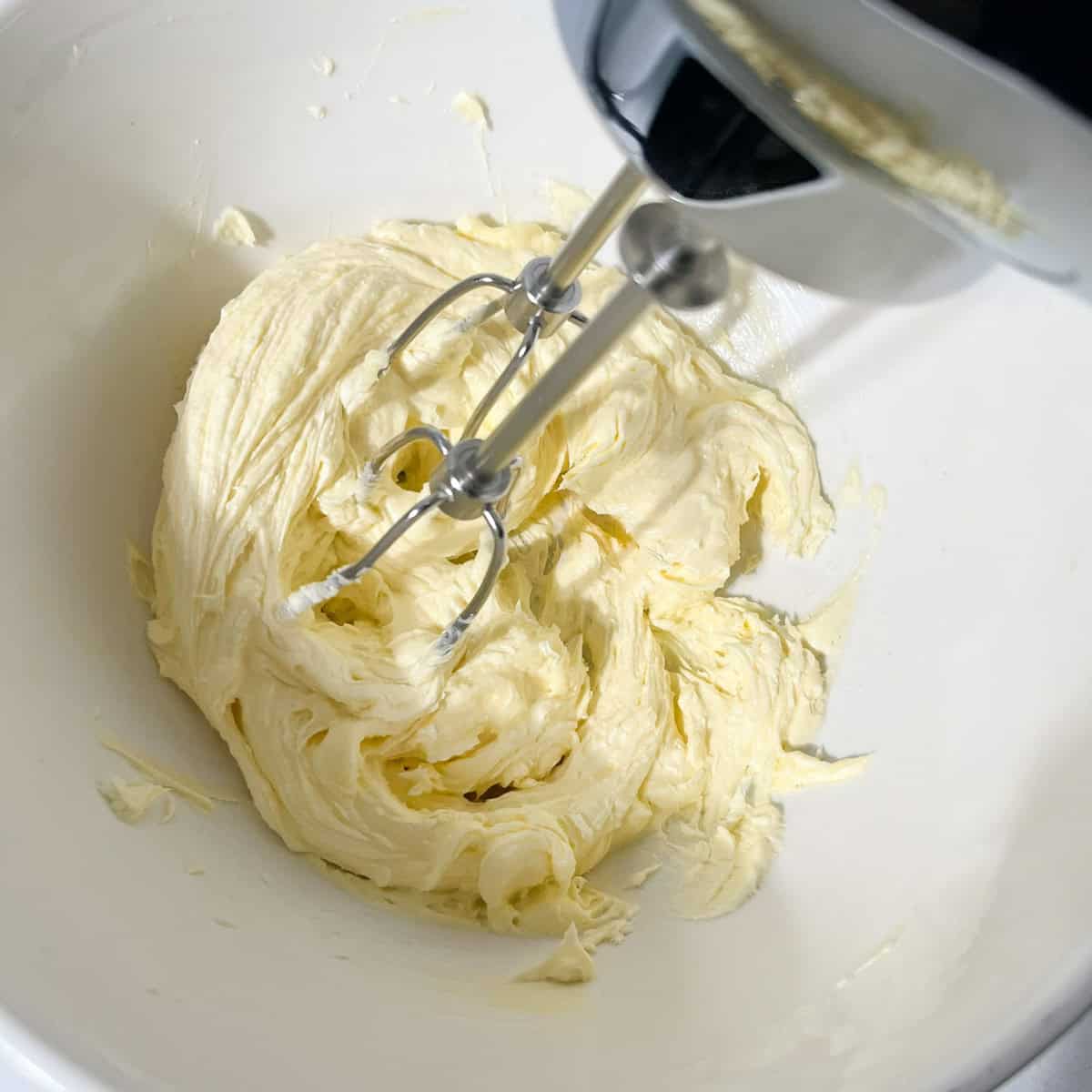
Step 1: Add the softened butter and caster sugar to a large mixing bowl. Beat for 2-3 minutes until smooth, creamy and slightly paler. The mixture does not need to become very light or fluffy.
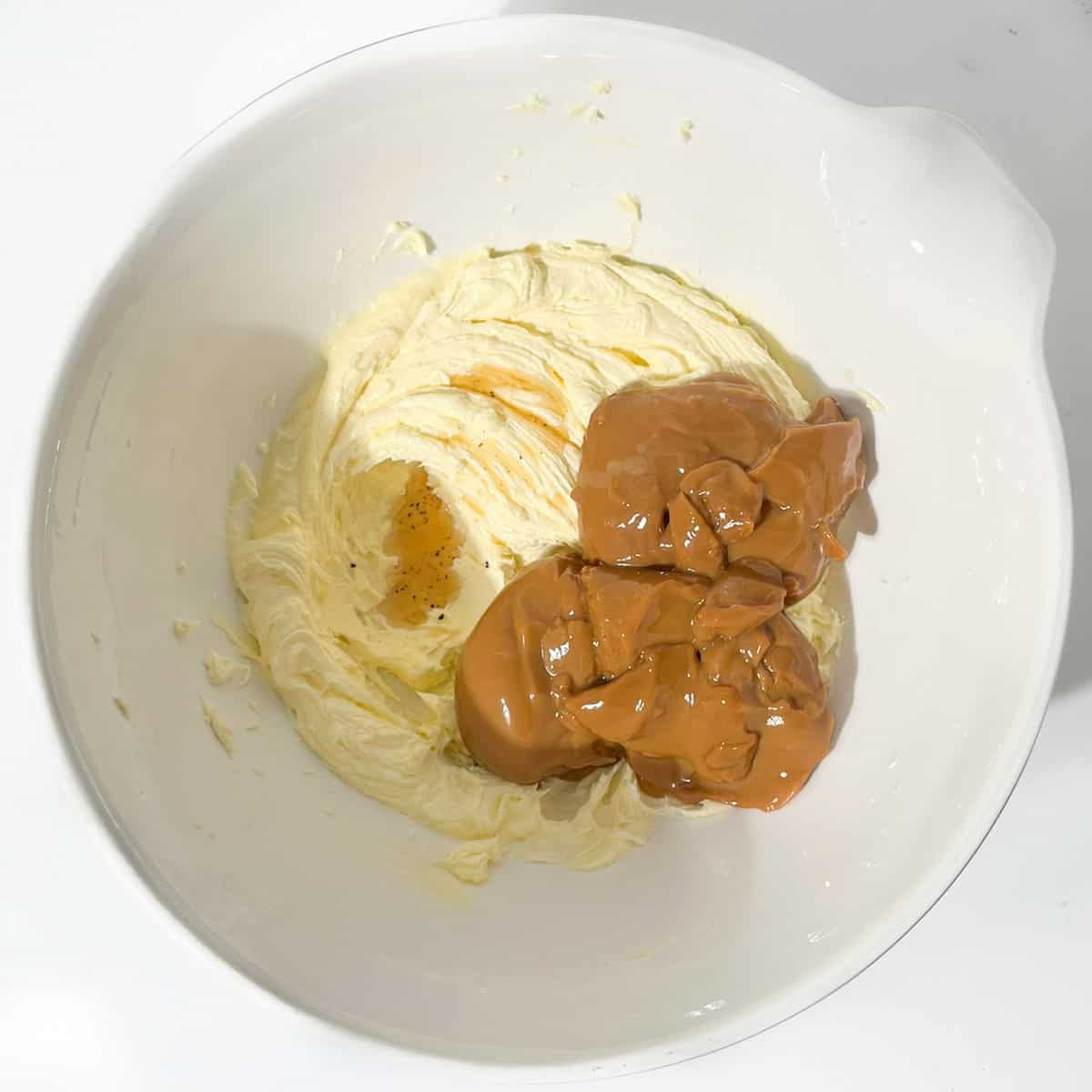
Step 2: Add the caramelised condensed milk and vanilla extract or caramel essence. Mix on low speed at first, then beat until smooth and evenly combined. Scrape down the sides and bottom of the bowl thoroughly.
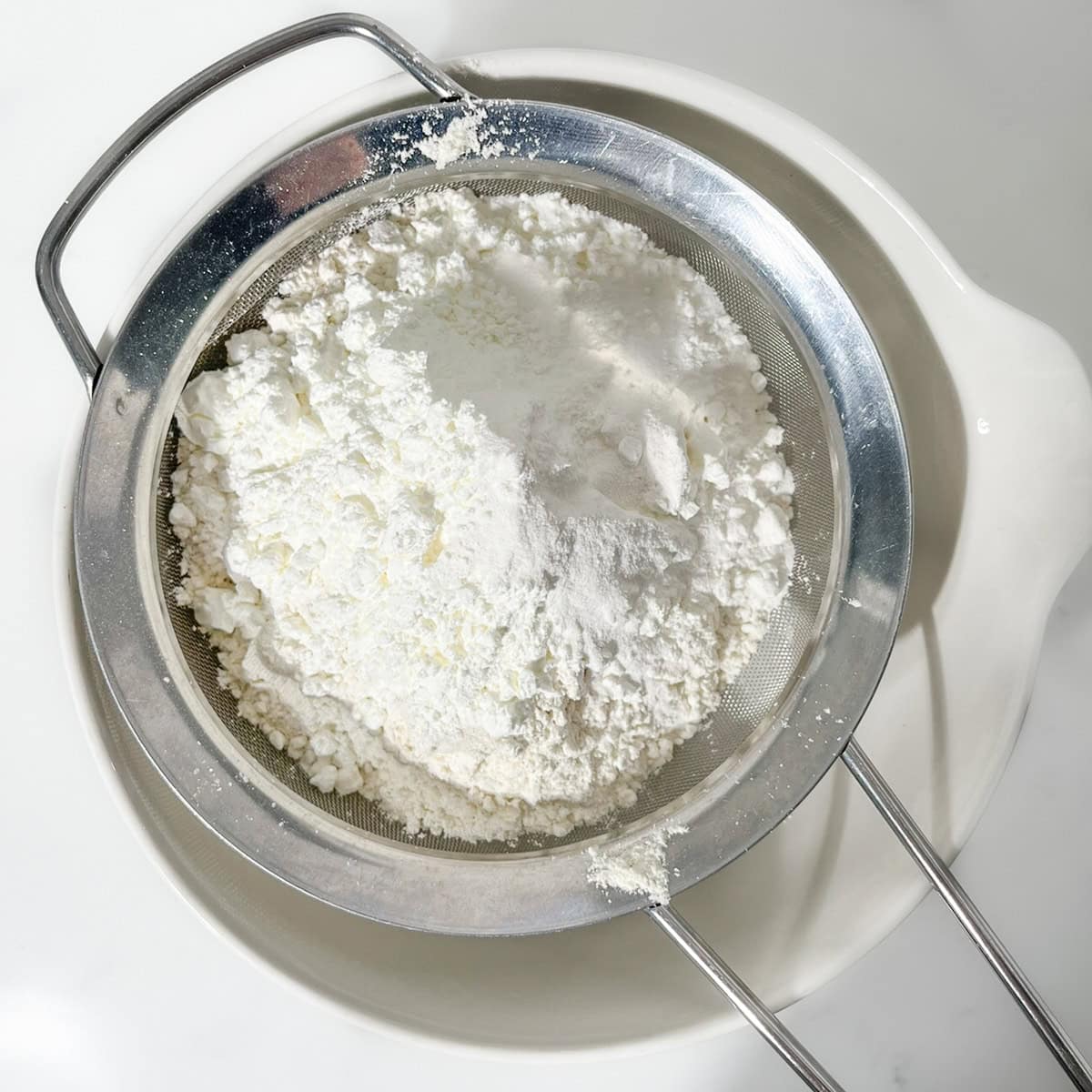
Step 3: Sift the plain flour, cornflour, baking powder and fine salt into a separate bowl.
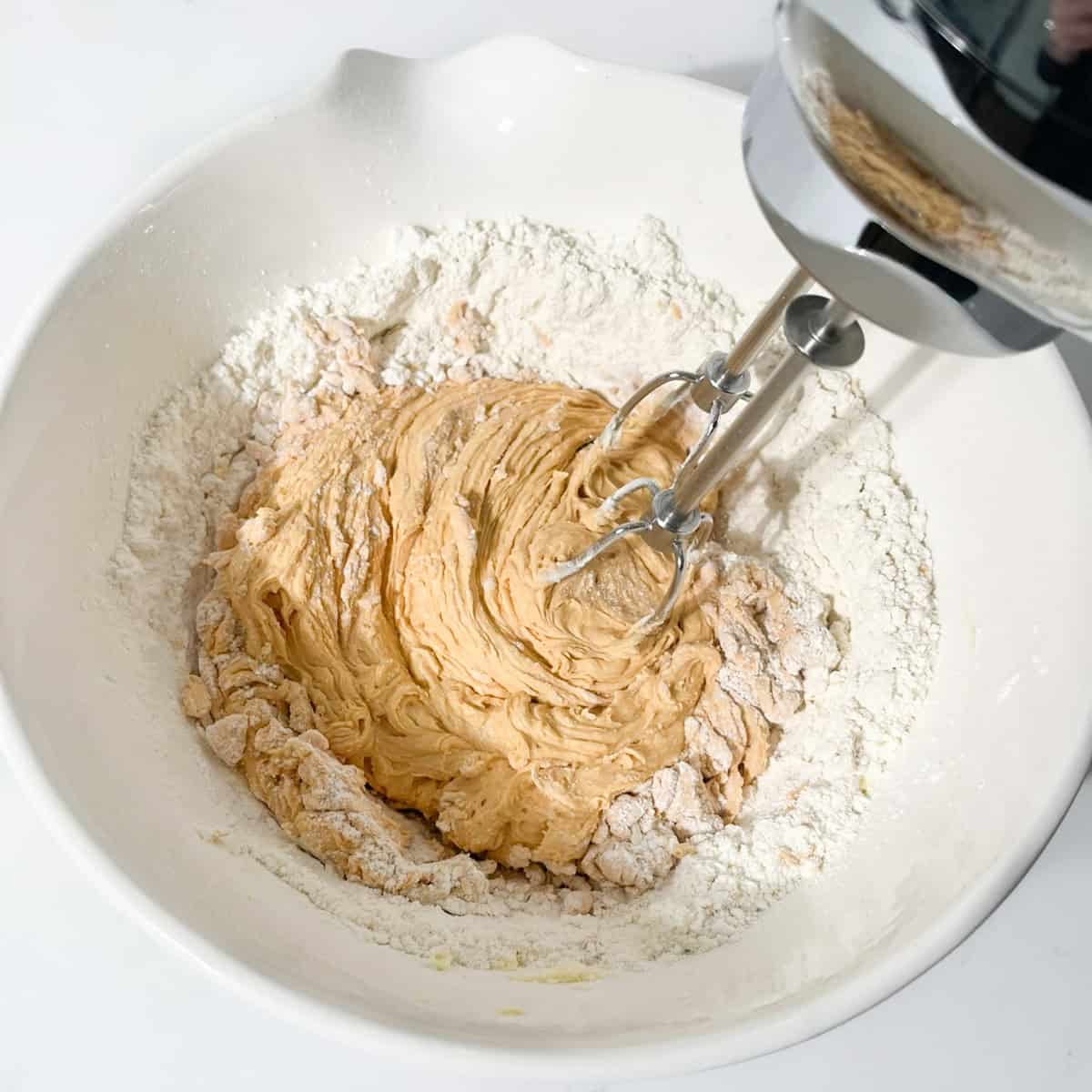
Step 4: Add half the dry ingredients to the caramel mixture. Mix on low speed until mostly incorporated.
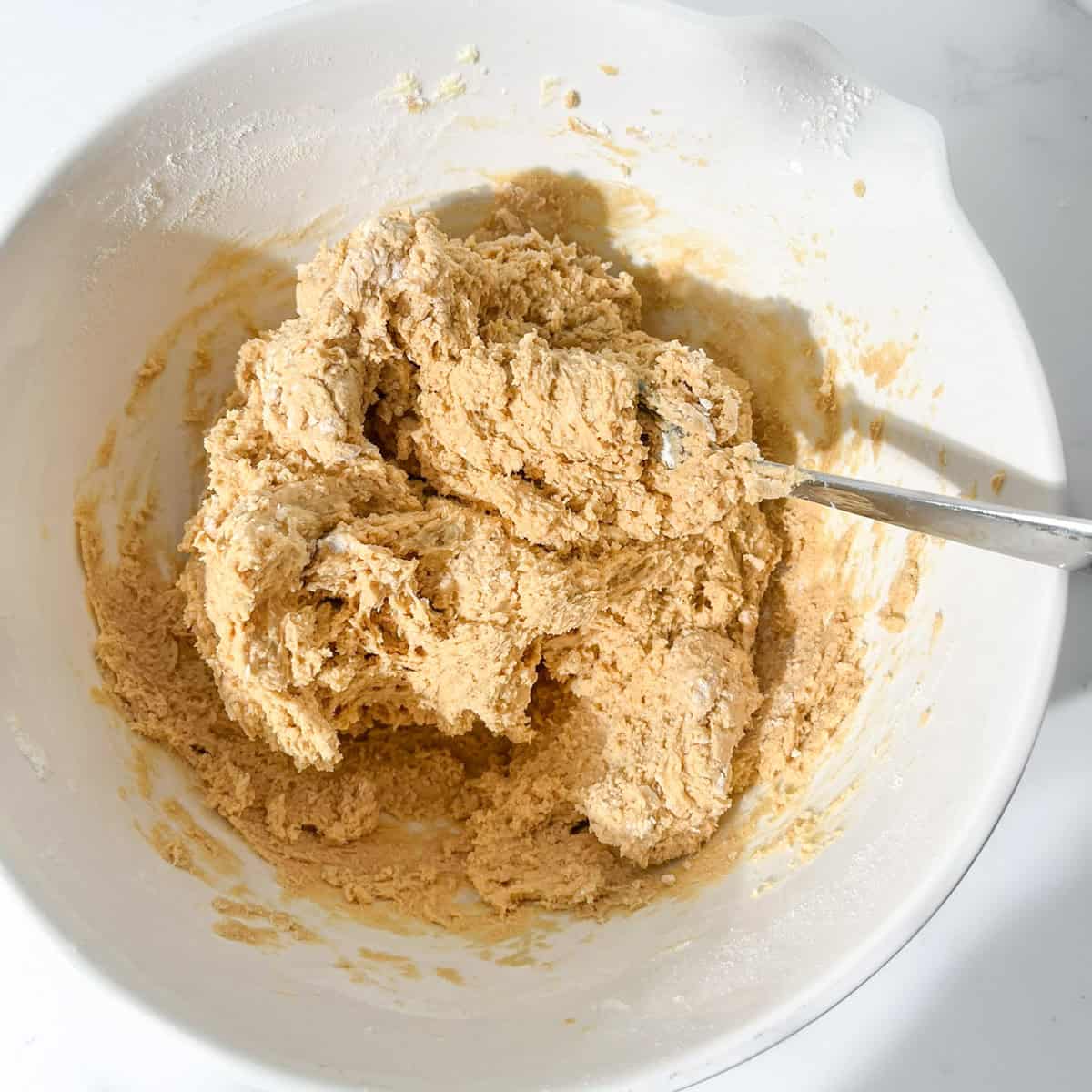
Step 5: Add the remaining dry ingredients. Use a spatula or your hands to bring the dough together just until no dry flour remains. Do not overmix. The dough will be very soft at this stage.
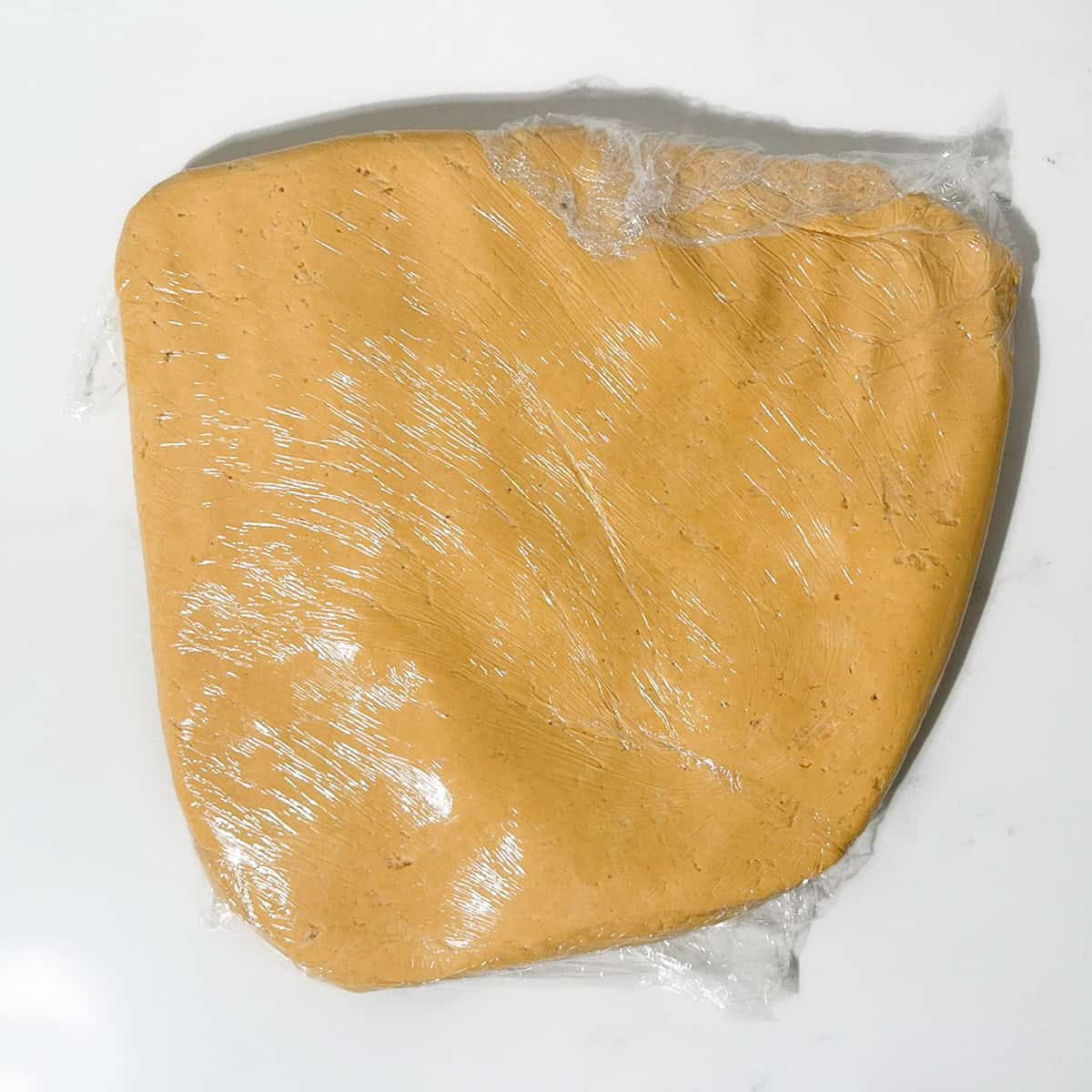
Step 6: Turn the dough out onto a sheet of cling film. Use the film to help shape it into a flat disc, then wrap it well and refrigerate for at least 30 minutes. Do not skip this step. Chilling firms the butter, allows the flour to absorb moisture from the caramel and makes the dough firm enough to roll.
Step 7: About 15 minutes before the chilling time is complete, preheat the oven to 180°C/160°C fan/350°F. Line two large baking trays with non-stick baking paper.
Step 8: Divide the chilled dough into 30g portions and roll each one into a smooth ball. Arrange them on the trays, leaving about 4cm between each cookie.
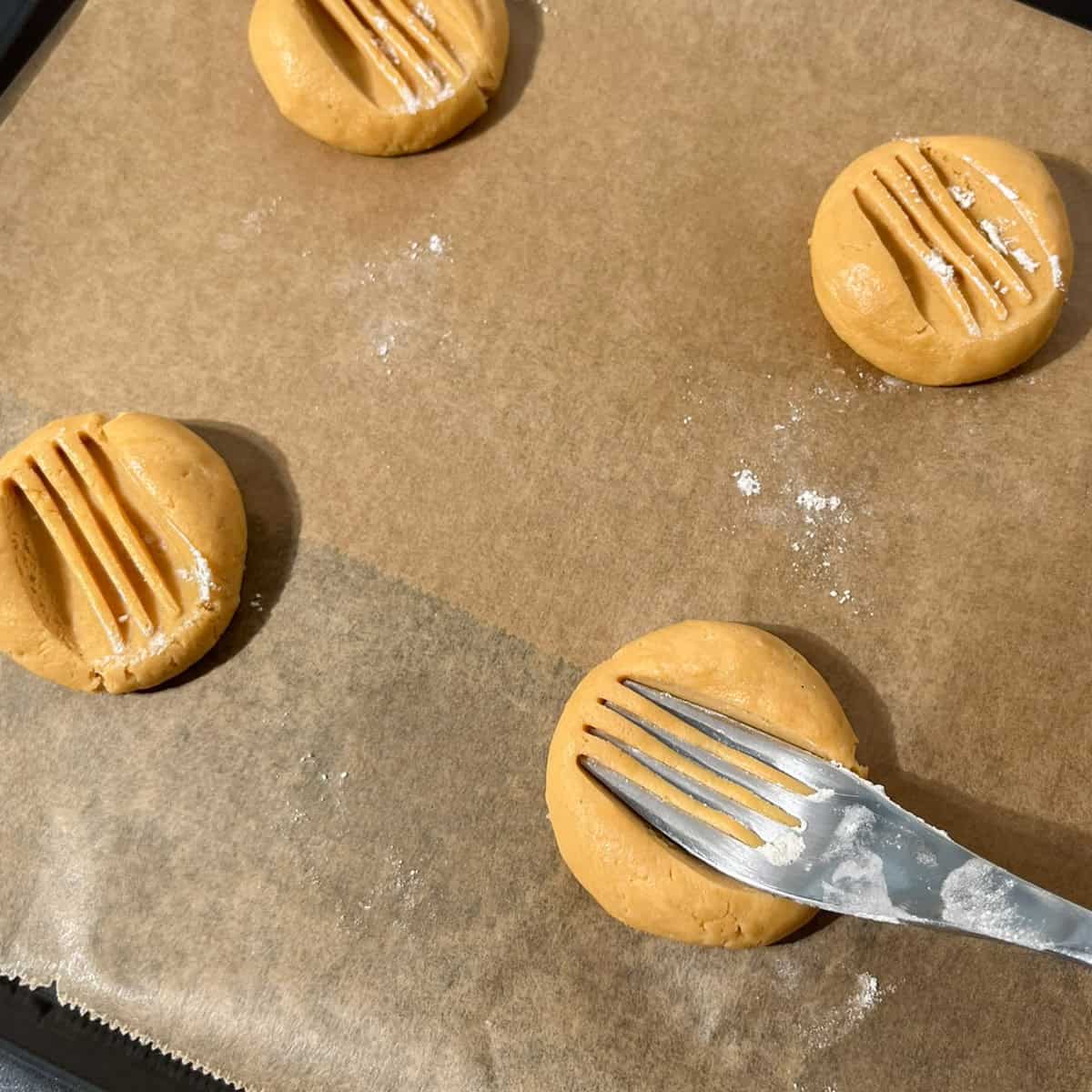
Step 9: Press each ball with a fork until it is approximately 7-8mm thick. Press in one direction or make a criss-cross pattern. Dip the fork lightly in flour if it sticks.
Step 10: Sprinkle each cookie with only a few grains of coarse or flaky sea salt, if using.
If you are baking the cookies in batches, return any shaped cookies to the fridge while the first tray bakes. This keeps the dough firm and helps prevent spreading.
Step 11: Bake for 14-15 minutes per tray, until the tops look dry and set and the edges and bottoms are lightly golden. The cookies will still feel soft when they first come out of the oven.
Step 12: Leave the cookies on the tray for 10 minutes to firm up. Transfer them carefully to a wire rack and allow them to cool completely.
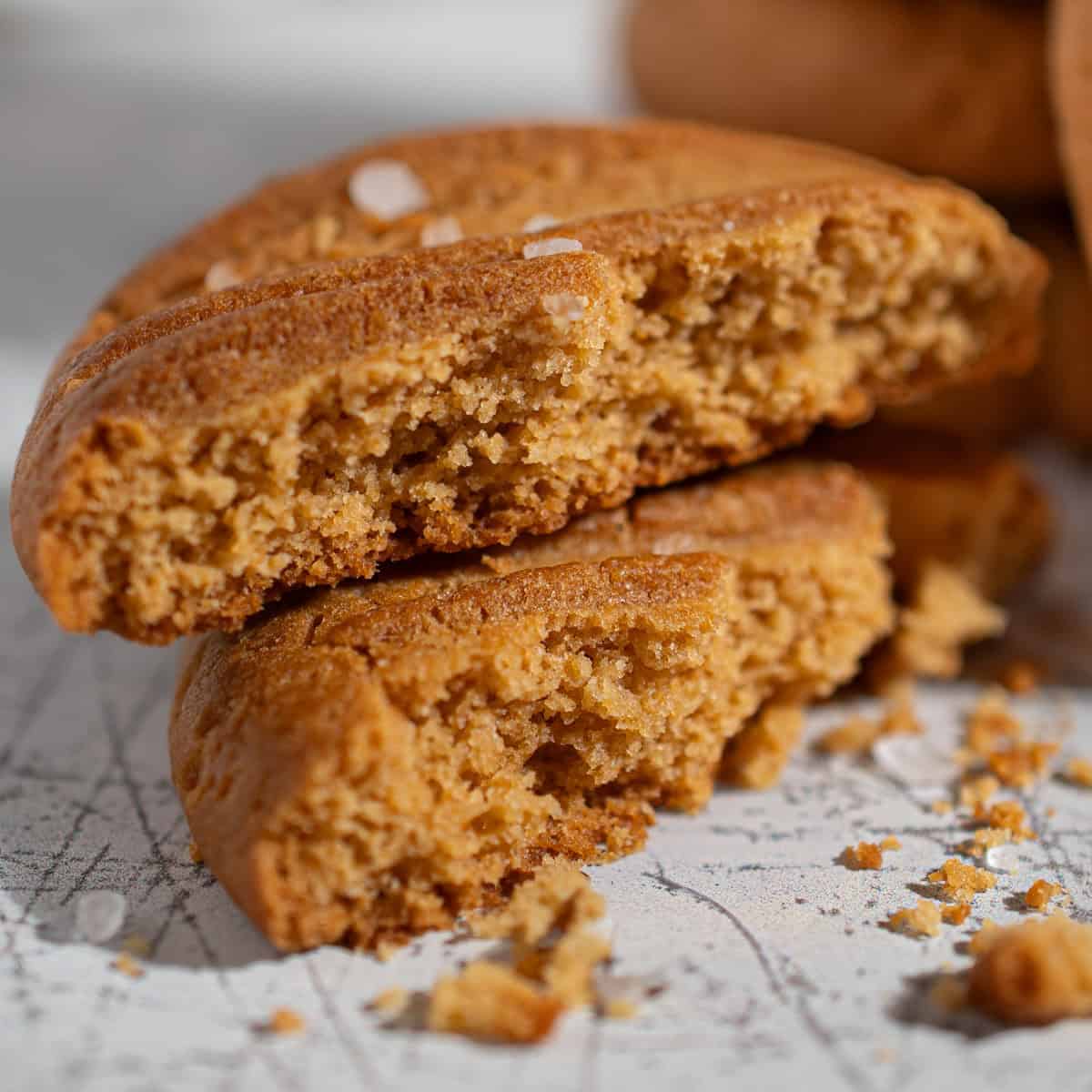
What the chilled dough should feel like
After at least 30 minutes in the fridge, the dough should:
- Roll cleanly without sticking heavily to your palms.
- Hold a neat round shape.
- Flatten under the fork without breaking into deep cracks.
- Keep visible fork marks.
- Feel soft and workable rather than stiff or floury.
If the dough still feels very soft, refrigerate it for another 10-15 minutes before shaping.
Top tips
- Weigh the portions. Thirty-gram balls bake evenly and give you cookies of a consistent thickness.
- Press them evenly. Cookies that are much thicker in the middle will remain softer and take longer to bake.
- Use very little coarse salt. A few grains are enough.
Troubleshooting
My dough is still too soft after chilling
Return it to the fridge for another 10-15 minutes. A warm kitchen or very soft butter can make the dough take a little longer to firm up.
The dough cracks when I roll or press it
The dough may be too cold. Leave it at room temperature for 5-10 minutes, then try again.
The cookies spread too much
Make sure the butter is softened but not greasy or partially melted. Keep shaped cookies in the fridge while they wait to be baked.
The cookies feel too soft when they come out of the oven
This is normal. Leave them on the tray for the full 10 minutes before moving them. They firm up as they cool, but the tops should already look dry and set with lightly golden edges and bottoms.
How to serve them
Serve the cookies with tea or coffee once they have cooled completely.
They also work well in a biscuit tin or as part of a mixed Christmas biscuit plate. The light sea-salt finish is particularly useful when serving them alongside sweeter iced or chocolate-coated biscuits.
Storage
Allow the cookies to cool completely before placing them in an airtight container at room temperature.
Do not seal them in a container while they are still warm. Trapped steam will soften the surface and can make the cookies feel damp.
More biscuit-tin favourites
For another South African biscuit-tin bake, try my outydse soetkoekies or homemade Romany Creams.
For more condensed milk cookies, try delicate Brazilian sequilhos or my chocolate chip condensed milk cookies.
Recipe
Caramel Condensed Milk Cookies
Ingredients
For the cookies
- 200 grams unsalted butter, softened but not greasy (or salted butter; reduce the fine salt to ¼ teaspoon)
- 50 grams caster sugar
- 300 grams Carnation Caramel, Caramel Treat or thick dulce de leche
- 1 teaspoon vanilla extract or standard caramel essence
- 380 grams plain flour/all-purpose flour
- 40 grams cornflour/cornstarch
- 1 teaspoon baking powder
- ½ teaspoon fine salt
To finish
- Coarse or flaky sea salt, for a very light sprinkle (optional)
Instructions
Make and chill the dough
- Add the softened butter and caster sugar to a large bowl. Beat for 2-3 minutes until smooth, creamy and slightly paler. It does not need to become very light or fluffy.200 grams unsalted butter, softened but not greasy (or salted butter; reduce the fine salt to ¼ teaspoon), 50 grams caster sugar
- Add the caramelised condensed milk and vanilla extract or caramel essence. Mix on low speed at first, then beat until smooth and evenly combined. Scrape down the sides and bottom of the bowl.300 grams Carnation Caramel, Caramel Treat or thick dulce de leche, 1 teaspoon vanilla extract or standard caramel essence
- Sift the plain flour, cornflour, baking powder and fine salt into a separate bowl.380 grams plain flour/all-purpose flour, 40 grams cornflour/cornstarch, 1 teaspoon baking powder, ½ teaspoon fine salt
- Add half the dry ingredients to the caramel mixture. Mix on low speed until mostly incorporated.
- Add the remaining dry ingredients. Use a spatula or your hands to bring the dough together just until no dry flour remains. Do not overmix.
- The dough will be quite soft at this stage. Turn it out onto a sheet of cling film, then use the film to help shape it into a flat disc. Wrap it well and refrigerate for at least 30 minutes. Flattening the dough helps it chill more quickly and evenly. Do not add extra flour before chilling.
Shape and bake
- About 15 minutes before the chilling time is complete, preheat the oven to 180°C/160°C fan/350°F. Line two large baking trays with non-stick baking paper.
- Divide the chilled dough into 30g portions and roll each one into a smooth ball. Arrange them on the trays, leaving about 4cm between each cookie.
- Press each ball with a fork until it is approximately 7-8mm thick. Press in one direction or make a criss-cross pattern. Dip the fork lightly in flour if it sticks.
- Sprinkle each cookie with only a few grains of coarse or flaky sea salt, if using.Coarse or flaky sea salt, for a very light sprinkle (optional)
- If baking in batches, keep any shaped cookies in the fridge while the first tray bakes.
- Bake for 14-15 minutes per tray, until the tops look dry and set and the edges and bottoms are lightly golden. The cookies will still feel soft when first removed from the oven.
- Leave the cookies on the tray for 10 minutes to firm up, then transfer them carefully to a wire rack and cool completely.
Notes
- For the most reliable result, use the gram measurements.
- The dough will be very soft at first. Chill it for the full 30 minutes before shaping; do not skip this step.
- If using salted butter, reduce the added fine salt to ¼ teaspoon.
- Use thick caramelised condensed milk, such as Carnation Caramel, Caramel Treat or dulce de leche. Do not use thin caramel sauce.
- The cookies will feel soft when hot but firm up as they cool.

**Nutritional data disclaimer**
Please keep in mind that the nutritional information provided below is calculated by a third party and we cannot guarantee the accuracy. We try our best to give you the most accurate information, but we do not take responsibility for errors that may be present. Also, the nutritional value of the recipe may change depending on the exact brands and products used. We recommend that you consult with a qualified healthcare professional or registered dietitian for personalised advice on your dietary needs.
Nutrition
For food safety advice, including guidance on food allergies


Darlene T says
Hello, I am in the United States and am very excited to make these cookies. Question though, in regards to the "cornflour" is that considered cornstarch (like a thickening agent), corn meal (which has a sandy texture), or is it similar to plain flour in texture, but is made from corn (like the cornflour used to make tortillas)? I want to make sure I'm using the correct ingredient. Thank you so very much!
Maretha Corbett says
Hello Darlene!
You'd be happy to know that cornflour is the exact same thing as cornstarch in the US, so go ahead and use that 🙂
Happy baking!
Maretha x