
If you’re frustrated with your couscous turning out too dry, too wet, soggy, clumpy, undercooked or overcooked, this basic recipe is for you!
Plus, this water-to-couscous ratio is easy to remember, also making it simple to scale the portion size up or down as needed. You will never have to look at a recipe again.
But the pièce de résistance? We’ll share the one ingredient that will make all the difference! No more disappointing couscous after today!
This Cypriot grain salad is a fantastic dish to use couscous in – give it a try!

What’s to love about this preparation method?
- An easy-to-remember water-to-couscous ratio so you don’t have to consult a recipe ever again.
- Perfectly separated grains thanks to a touch of oil, no clumping.
- No cooking is required, just boiled water.
- Ready in 10 minutes.
- A great quick alternative to rice, it works perfectly as a side dish or in a salad and can be used in a myriad of recipes.
For more lavish, zhooshed-up grains, why not try this majestic Moroccan rice, a Cypriot grain salad, or this easy Egyptian rice with vermicelli?
Key ingredient notes and substitutions
**Please see the recipe card at the bottom of this post for the full list of ingredients.

Couscous
This recipe is for the standard-grain couscous you find in most supermarkets.
Giant couscous, on the other hand, needs to be boiled on the stove for a few minutes, just like pasta. We’re not covering that here.
Did you know?
Couscous is made by rolling moistened semolina wheat into tiny granules, then coating them with finely ground wheat flour? This labour-intensive process was traditionally done by hand!
Oil
And that’s the secret weapon to perfect couscous preparation – oil!
Coating the couscous in a thin layer of oil before adding the boiled water keeps the couscous grains perfectly separate and fluffy – no clogging at all.
It’s such a simple trick, but it works wonders!
You can use any neutral oil like olive oil, vegetable oil, sunflower oil etc.
Top Tips
- Don’t let the couscous sit too long before fluffing it up.
For a cup of couscous to a cup of water, 10 minutes is ideal. Any longer, and it may become too soft and start clumping together. - Stick to the recommended volume ratio of 1:1 couscous to water. Don’t be tempted to add more water if it ‘doesn’t look enough’.
- Use a fork to fluff the couscous, not a spoon.
This is key to separating the grains and achieving that sought-after light, fluffy texture. - Don’t forget to season with salt before serving! Just like rice, unsalted couscous can be a bit bland. See further down for more flavour boosters.
Step-by-step instructions

1. Add the couscous to a bowl and pour over the oil.

2. Using a fork, work the oil through the couscous to ensure all the grains are evenly coated.

3. Pour the freshly boiled water over the couscous, ensuring all the grains are covered. Stir briefly if necessary.

4. Let the couscous sit for about 10 minutes. Leaving it longer may make it soggy.

5. When the time is up, use a fork to gently fluff the couscous. Season with salt to taste before serving.
How much couscous per person?
For a standard serving, plan on about 1/4 to 1/3 cup of dry couscous per person. This generally yields around 1/2 to 3/4 cup of cooked couscous per portion.
Storage
To store couscous, let it cool completely before transferring it to an airtight container. It will keep in the fridge for up to 5 days.
For longer storage, you can freeze couscous in a freezer-safe bag or container for up to 3 months.
To reheat, simply microwave it or stir it in a pan with a splash of water to regain its fluffy texture.
How to make plain couscous tasty
Salt and pepper: Start with the basics – season your couscous with salt and pepper.
This simple step is essential for bringing out the natural flavours and making the dish more palatable, just as with rice and pasta.
Bouillon couscous/couscous made with stock: Instead of just using water, prepare your couscous with vegetable or chicken bouillon or stock.
This method infuses the couscous with a rich, savoury flavour right from the start.
Just dissolve a bouillon cube or concentrate in boiling water before adding it to the couscous
North African or Middle Eastern ingredients or spices: Try adding a pinch of cumin or coriander for a warm, earthy flavour.
Fresh herbs like mint and parsley can add brightness and freshness.
A squeeze of lemon juice can provide a zesty lift.
For a touch of sweetness and texture, mix in pomegranate seeds, dried fruits like cranberries or apricots and chopped nuts.
If you like a bit of heat, add some chopped chillies.
For a more robust flavour, consider incorporating minced garlic or olives.
Perfect pairings
Moroccan tagine: A traditional North African stew made with meat (such as lamb or chicken), vegetables and aromatic spices. The couscous soaks up the rich, flavourful sauce.
Grilled or roasted vegetables: Tossed with olive oil and herbs, grilled or roasted vegetables complement the light texture of couscous and make for a hearty vegetarian meal.
Chicken shawarma: Spiced chicken cooked on a vertical rotisserie, served with a side of couscous and a dollop of yoghurt sauce or tahini.
Lamb kofta: Spiced lamb meatballs or skewers that are grilled or baked, often served with couscous and a side of tzatziki or a fresh salad.
Mediterranean salad: A refreshing mix of tomatoes, cucumbers, olives, feta cheese and herbs, which pairs well with the mild flavour of couscous. Or try this beautiful Cypriot grain salad.
Falafel: Crispy, spiced chickpea patties that go wonderfully with couscous, often served with a side of hummus or tahini sauce.
Stuffed Peppers: Bell peppers filled with a mix of couscous, vegetables and sometimes meat, then baked until tender.
Roasted chicken: Simple, well-seasoned roasted chicken breasts or thighs make for a comforting pairing with couscous. Here’s a great recipe for Greek roast chicken.
Chickpea stew: A hearty stew made with chickpeas, tomatoes and spices that complements couscous beautifully.
Some of our favourite side dishes to try
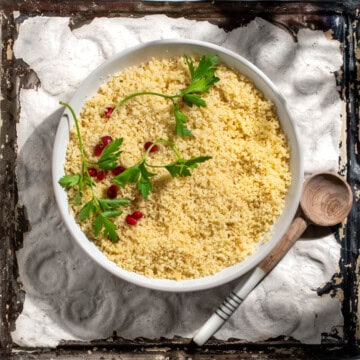
How to cook couscous perfectly every time
Ingredients
- 1 cup couscous
- 1 cup boiled water
- 1 tablespoon oil
- salt to taste
Instructions
- Add the couscous to a bowl and pour over the oil.1 cup couscous, 1 tablespoon oil
- Using a fork, work the oil through the couscous to ensure all the grains are evenly coated.
- Pour the freshly boiled water over the couscous, ensuring all the grains are covered. Stir briefly if necessary.1 cup boiled water
- Let the couscous sit for about 10 minutes. Leaving it longer may make it soggy.
- When the time is up, use a fork to gently fluff the couscous. Season with salt to taste before serving.salt to taste
Notes
- Don’t let the couscous sit too long before fluffing it up. For a cup of couscous to a cup of water, 10 minutes is ideal. Any longer, and it may become too soft and start clumping together.
- Stick to the recommended ratio of 1:1 couscous to water. Don’t be tempted to add more water if it ‘doesn’t look enough’.
- Use a fork to fluff the couscous, not a spoon. This is key to separating the grains and achieving that sought-after light, fluffy texture.
- Don’t forget to season with salt before serving! Just like rice, unsalted couscous can be a bit bland. See further down for more flavour boosters.
Nutrition
For food safety advice, including guidance on food allergies


Finally! A recipe that works! We’ve actually stopped eating couscous because I could just never get it right. The secret is the oil!
Hey Kelly, I was the same for years. Avoided couscous like the plague and started to doubt my cooking abilities. Until…the OIL! Glad it worked for you too!
Sorry I forgot to rate it!