

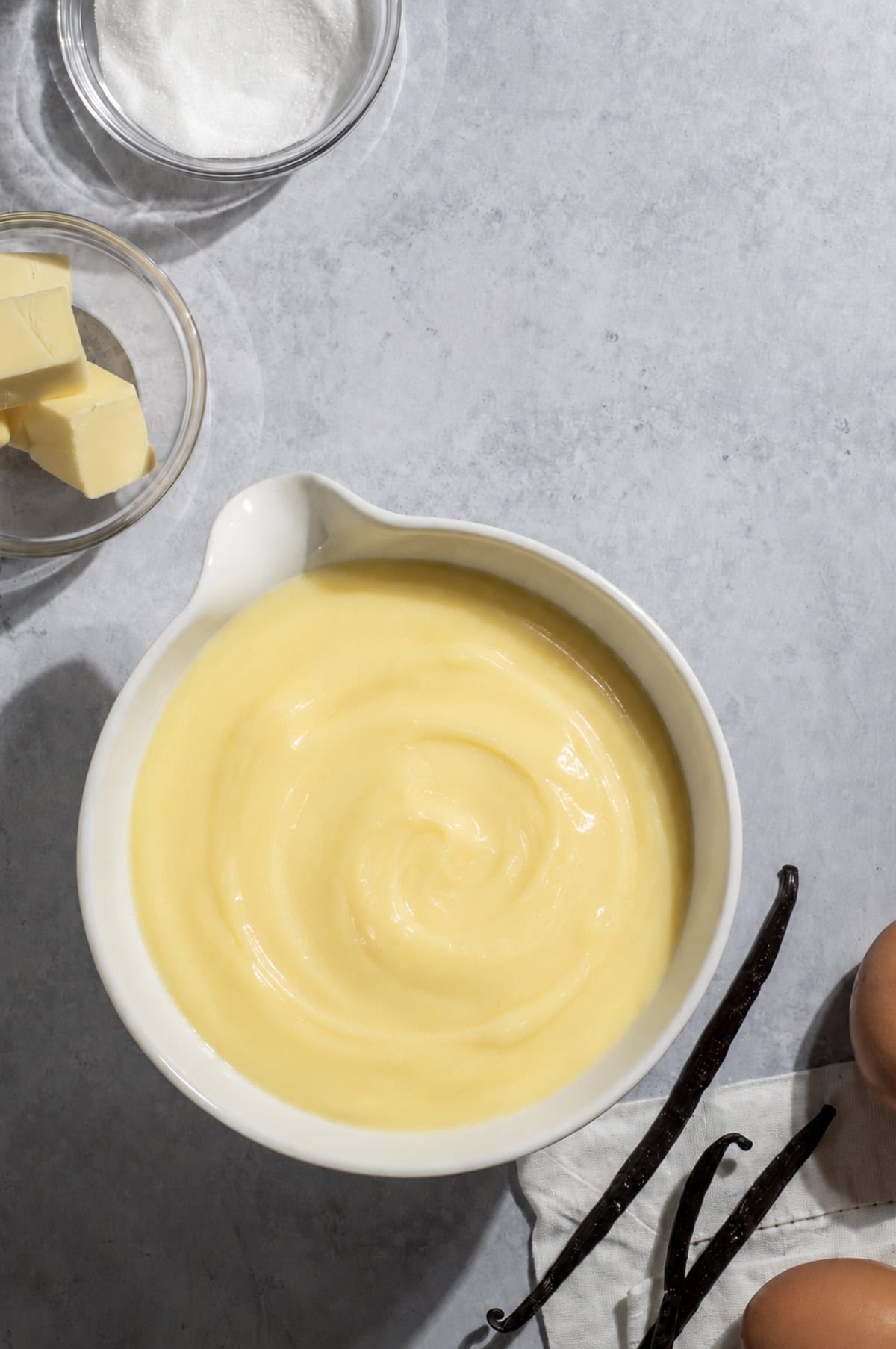
Crème pâtissière is a thick vanilla pastry cream made with milk, egg yolks, sugar and starch. It is richer and firmer than pouring custard, so it works beautifully as a filling for trifles, fruit tarts, choux buns, éclairs, doughnuts and layered desserts.
This version is made with everyday ingredients and a simple stovetop method. The main trick is to whisk steadily and cook it until it thickens into a glossy cream that holds its shape on a spoon.
I use crème pâtissière when I want something thicker and more luxurious than ordinary custard, especially in desserts like my festive sherry trifle recipe or French fruit tart. Don't let the fancy French name put you off. If you can make custard, you can make this.
Jump to:
Why this recipe works
- Thicker than custard: Firm enough to spoon, pipe or layer.
- Make-ahead friendly: It needs chilling, so you can prepare it in advance.
- Everyday ingredients: Milk, egg yolks, sugar, flour, cornflour, vanilla and butter.
- Clear doneness cue: It's ready when glossy, thick and gently bubbling.
- Not as fancy as it sounds: If you can make custard, you can make this.
Crème pâtissière vs custard
Crème pâtissière is thicker than ordinary pouring custard because it is made with egg yolks and starch. It sets into a spoonable, pipeable cream, while custard is usually softer and more pourable.
Use crème pâtissière when you need a filling that holds its shape, such as in fruit tarts, choux buns, éclairs, doughnuts or a firmer trifle layer. Use pouring custard when you want a sauce for puddings, sponge cakes or crumbles.
Ingredient notes
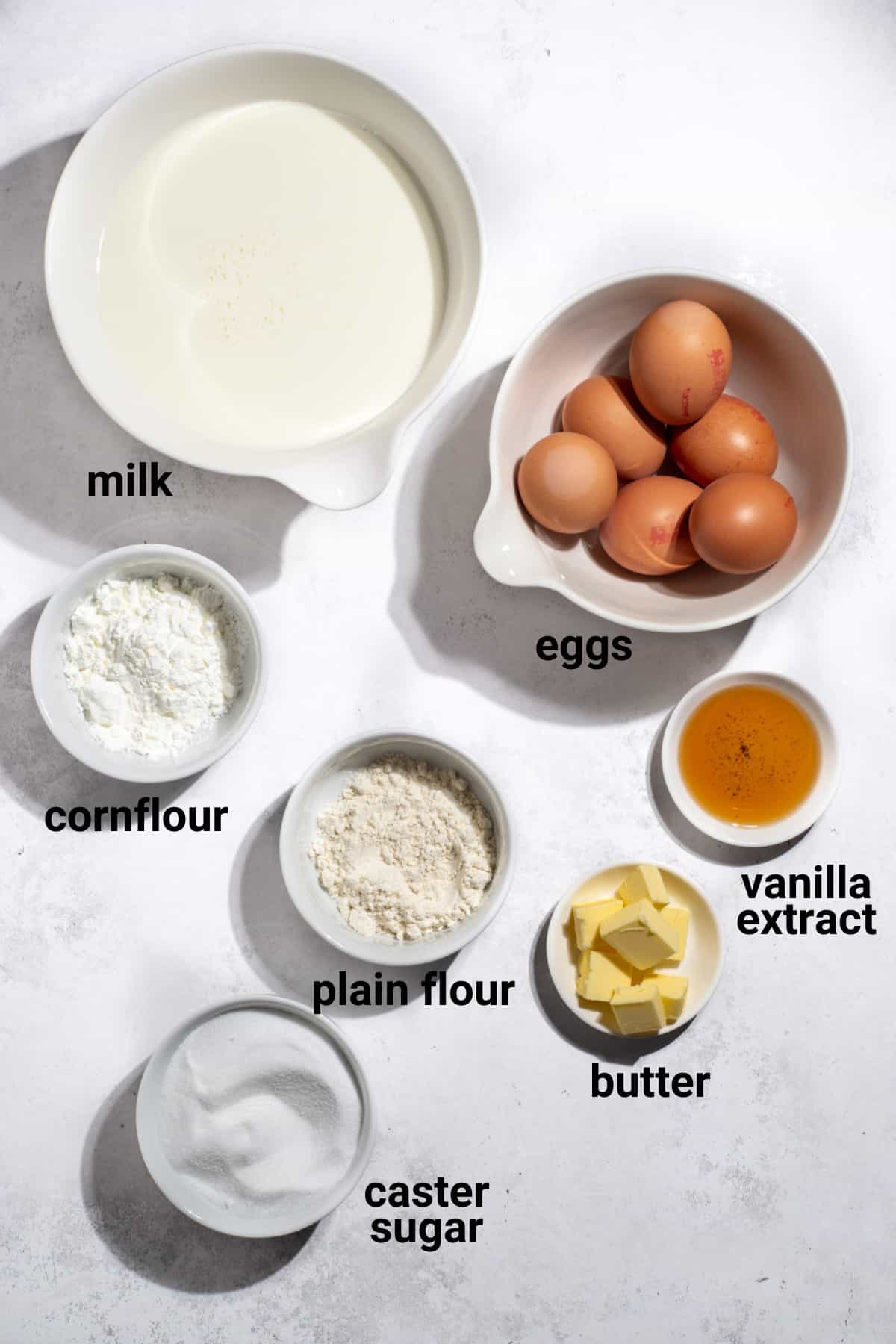
You'll find the full ingredient list with measurements in the recipe card at the bottom of the post.
Full-cream milk
Use full-cream milk, or whole milk if you are in the US. It gives the pastry cream a smoother, richer texture than skimmed milk.
I would avoid swapping all the milk for cream in this specific recipe, as the balance of fat, egg yolks and starch has been written for milk.
Egg yolks
Use egg yolks, not whole eggs. Yolks give crème pâtissière its richer colour, flavour and creamy texture.
You can save the egg whites for lemon meringue cheesecake or homemade marshmallow fluff.
Cornflour and plain flour
This recipe uses both cornflour and plain flour. The starch helps the pastry cream thicken and hold its shape once chilled.
In the UK, use cornflour. In the US, this is cornstarch.
Vanilla
Vanilla is the main flavour here, so use a good vanilla extract, vanilla bean paste or a split vanilla pod.
If using a vanilla pod, scrape the seeds into the milk and add the pod too while the milk warms. Remove the pod before combining the milk with the egg mixture.
Butter
Butter is whisked in at the end for shine and a smoother finish. It also rounds out the flavour once the pastry cream has chilled.
How to make crème pâtissière

Step 1: Pour the milk into a large saucepan and add the vanilla extract. If using a vanilla pod, add the seeds and the pod to the milk.
Step 2: Warm the milk over medium-low heat until it is steaming and just starting to simmer around the edges. Do not let it boil hard or catch on the bottom.

Step 3: While the milk is heating, add the egg yolks, sugar, plain flour and cornflour to a large bowl.

Step 4: Whisk until smooth and lump-free. The mixture will look thick and pale.

Step 5: Remove the hot milk from the heat. Slowly pour about one-third of the milk into the egg mixture, whisking all the time. This gently warms the eggs without scrambling them.

Step 6: Pour the warmed egg mixture back into the saucepan with the remaining milk and whisk well.

Step 7: Return the pan to medium-low heat and whisk continuously until the mixture thickens and starts to bubble.

Step 8: Once it begins to bubble, reduce the heat to low and keep whisking for about 2 minutes. The pastry cream should look glossy, thick and smooth, with slow bubbles breaking through the surface.

Step 9: Remove from the heat and whisk in the butter until fully melted and the pastry cream looks shiny.

Step 10: Transfer to a clean bowl. Press cling film directly onto the surface to stop a skin forming.
Step 11: Cool to room temperature, then refrigerate until fully chilled.
Step 12: Before using, whisk the chilled pastry cream until smooth. For a softer trifle layer, whisk in a small splash of milk or cream until it reaches the consistency you want.
Top tips
Whisk constantly once it goes back in the pan
Once the egg mixture goes back into the saucepan, whisk continuously over medium-low heat. Pay attention to the base and corners of the pan, where the pastry cream can thicken first and turn lumpy if left alone.
Look for slow bubbles
The pastry cream needs to bubble gently for the starch and flour to cook properly. Look for thick, slow bubbles rather than a fast boil.
Chill it properly
Crème pâtissière thickens as it cools. It may look slightly softer while warm, but it becomes firmer once chilled.
Whisk before using
Chilled pastry cream can look stiff at first. Whisk it briefly before spooning, piping or layering it into desserts.
Troubleshooting
Why is my crème pâtissière lumpy?
Lumps usually happen when the egg mixture gets too hot too quickly, or when the pastry cream is not whisked enough as it thickens. Whisk it firmly while it is still warm, making sure to get into the base and corners of the pan.
For small lumps, a quick blitz with a stick blender can smooth it out. For stubborn lumps, pass the pastry cream through a fine sieve before chilling.
Why is my pastry cream too thin?
It may not have cooked for long enough after it started bubbling. The mixture needs to bubble gently and be whisked for about 2 minutes so the flour and cornflour can thicken properly.
Why is my pastry cream too thick?
Crème pâtissière thickens as it chills. If it is too firm for your purpose, whisk it well, then add a small splash of milk or cream until it softens.
Why does it taste floury?
It probably needed a little longer on the heat. Once the mixture starts to bubble, keep it on low heat and whisk for about 2 minutes to cook out the floury taste.
How do I stop a skin forming?
Press cling film directly onto the surface while it cools. Do not just cover the bowl, as the exposed surface can still form a skin.
Variations
- Chocolate crème pâtissière: Whisk chopped chocolate into the hot pastry cream after removing it from the heat.
- Citrus pastry cream: Infuse the milk with lemon or orange zest, then strain before combining with the egg mixture.
- Coffee pastry cream: Stir in a little instant espresso powder with the warm milk.
- Biscoff or Nutella pastry cream: Whisk in a spoonful after cooking, once the pastry cream has cooled slightly.
- Crème légère: Fold whipped cream through chilled crème pâtissière for a lighter filling.
Uses for crème pâtissière
Crème pâtissière is best when you need a thick vanilla filling that holds its shape. Use it for:
- festive sherry trifle
- French fruit tart
- choux buns or cream puffs
- éclairs
- mille-feuille
- doughnuts
- cake layers
- Danish pastries
- fresh fruit desserts
For trifles, I like to whisk the chilled pastry cream first, then loosen it with a small splash of milk or cream so it spreads neatly over the fruit and sponge.
Storage
Store crème pâtissière in an airtight container in the fridge for up to 3 days. Press cling film directly onto the surface before chilling to stop a skin forming.
Before using, whisk it until smooth. If it is too thick for your dessert, add a small splash of milk or cream and whisk again.
I do not recommend freezing crème pâtissière because the texture can split and turn grainy once thawed.
Recipe
Crème Pâtissière - Vanilla Pastry Cream
Equipment
- 1 wire whisk
Ingredients
- 500 millilitre full cream milk (2 US cups + 2 tablespoons whole milk)
- 2 teaspoons vanilla extract - or, 1 vanilla pod, split lengthways and seeds scraped
- 6 egg yolks
- 100 grams caster sugar (½ US cup superfine sugar)
- 2.5 tablespoons plain flour/all-purpose flour
- 2.5 tablespoons cornflour/cornstarch
- 1 tablespoon butter (heaped tablespoon)
Instructions
- Pour the milk into a large saucepan and add the vanilla extract. If using a vanilla pod, add the seeds and the pod to the milk.500 millilitre full cream milk (2 US cups + 2 tablespoons whole milk), 2 teaspoons vanilla extract
- Warm the milk over medium-low heat until it is steaming and just starting to simmer around the edges. Do not let it boil hard or catch on the bottom.
- While the milk is heating, add the egg yolks, sugar, plain flour and cornflour to a large bowl.6 egg yolks, 100 grams caster sugar (½ US cup superfine sugar), 2.5 tablespoons plain flour/all-purpose flour, 2.5 tablespoons cornflour/cornstarch
- Whisk until smooth and lump-free. The mixture will look thick and pale.
- Remove the hot milk from the heat. Slowly pour about one-third of the milk into the egg mixture, whisking constantly. This gently warms the eggs without scrambling them.
- Pour the warmed egg mixture back into the saucepan with the remaining milk and whisk well.
- Return the pan to medium-low heat and whisk continuously until the mixture thickens and starts to bubble.
- Once it begins to bubble, reduce the heat to low and keep whisking for about 2 minutes. The pastry cream should look glossy, thick and smooth, with slow bubbles breaking through the surface.
- Remove from the heat and whisk in the butter until fully melted and the pastry cream looks shiny.1 tablespoon butter (heaped tablespoon)
- Transfer to a clean bowl. Press cling film directly onto the surface to stop a skin forming.
- Cool to room temperature, then refrigerate until fully chilled.
- Before using, whisk the chilled pastry cream until smooth. For a softer trifle layer, whisk in a small splash of milk or cream until it reaches the consistency you want.
Notes
- Whisk constantly once the egg mixture goes back into the pan to prevent lumps.
- Cook for about 2 minutes after the mixture starts bubbling to cook out the floury taste.
- Press cling film directly onto the surface while cooling to prevent a skin.
- Whisk chilled pastry cream before using. Add a small splash of milk or cream if you need it softer for trifle.
- Store in the fridge for up to 3 days. Not suitable for freezing.

**Nutritional data disclaimer**
Please keep in mind that the nutritional information provided below is calculated by a third party and we cannot guarantee the accuracy. We try our best to give you the most accurate information, but we do not take responsibility for errors that may be present. Also, the nutritional value of the recipe may change depending on the exact brands and products used. We recommend that you consult with a qualified healthcare professional or registered dietitian for personalised advice on your dietary needs.
Nutrition
For food safety advice, including guidance on food allergies

Leave a Reply