
New Zealand is known for many great things: Stunning scenery, The Lord of the Rings saga, the Mighty All Blacks, ancient traditions and the powerful Haka, to name just a few.
But tucked in the heart of Kiwi cuisine lies a hidden gem – Tan Square, or as some call it, Tan Slice.
It’s wonderfully simple to make and consists of three parts:
- A crumbly, rich shortbread biscuit base.
- A velvety caramel filling.
- Finally, a layer of shortbread crumbs for that perfect, buttery crunch.
If you’re familiar with Old-fashioned Jam Squares, this classic New Zealand treat has a similar method of preparation and is equally scrumptious.

What’s to love about this recipe
- We use dark brown sugar in the caramel for an extra-rich, dark caramel layer. You can also use light brown sugar for a lighter caramel.
- The shortbread biscuit base is par-baked on its own before adding the caramel, ensuring it’s light and crumbly, not chewy or dense.
- Easy to make, suitable even for novice bakers.
- These condensed milk slices are perfect for lunch box treats, afternoon tea or presented as a thoughtful gift in a pretty biscuit tin.
Key ingredient notes and substitutions
**Please see the recipe card at the bottom of this post for the full list of ingredients.

Unsalted butter
We prefer to use unsalted butter for better control over the overall saltiness in the recipe.
However, if salted butter is your preference, we suggest excluding the additional half teaspoon of salt intended for the shortbread base.
Furthermore, adjust the salt quantity in the caramel filling, reducing it to half a teaspoon instead of a full one.
The sugars
Two different sugars are used in this tan slice recipe: White granulated sugar for the shortcrust cookie base and dark brown sugar for the caramel layer.
The dark brown sugar offers a deeper, richer flavour to the caramel.
If you prefer a lighter caramel taste and colour, you can swap the dark brown sugar for light brown sugar.
Vanilla extract or essence
Vanilla complements caramel flavours beautifully. It makes the butter taste richer and the sugar sweeter.
Discover how to easily create high-quality, pure vanilla extract at home and save money in the long run.
Condensed milk
You will need a whole can of full-cream condensed milk for this recipe, so there’s no wastage. Most cans worldwide weigh about 397g. A small deviation in grams won’t affect the outcome.
Golden syrup
Golden syrup is quite a common ingredient found in supermarkets right across the globe these days.
According to Martha Stewart, most US supermarkets stock it too. This should hopefully be the case when searching for it!
We’ve also heard that dark corn syrup is a reasonable substitute for golden syrup, but we have not tried this ourselves.
Coarse sea salt (optional)
Salt and caramel – a match made in heaven!
A touch of flaky sea salt like Maldon takes these tan slices to new heights. While it’s optional, we highly recommend trying it. Start with a little and test on one square to see if you like it and to find your perfect balance.
The baking dish
This recipe is tailored for a 23cm x 33cm (9″ x 13″) baking dish.
If yours is slightly smaller, you’ll get slightly thicker slices, which is perfectly fine too. However, we advise against using a larger dish unless you scale up the recipe. The squares will simply be too thin.
An important note on the shortbread biscuit dough
Our goal is to achieve a light and crumbly biscuit base, in other words, ‘short’. Some key points to remember:
- The dough might seem excessively dry. Once you’ve blended in the dry ingredients, it might resemble a bowl of crumbs. That’s entirely intentional. Just gently press the mixture together using your hands.
- In many tan slice recipes, the wet caramel layer is added directly onto the unbaked biscuit base, often leading to a denser texture.
To counteract this, we partially bake the shortbread for around 15 minutes until it reaches a very light golden hue.
This method allows it to develop a lighter and crumblier texture before the caramel is added.
How to make Tan Square: Step-by-step guide
Making the biscuit base
- Preheat the oven to 180C/350F.

- Prepare a 23cm x 33cm (9″ x 13″) baking dish by lining it with parchment paper (baking paper), leaving a slight overhang, which will make it easier to lift the slice from the tin later.
A helpful tip: Lightly coat the tin with butter or cooking spray before laying the paper to help it adhere more effectively.

- Add the unsalted butter, sugar and vanilla extract to a large mixing bowl or the bowl of a stand mixer.

- Beat the ingredients together for a minimum of 5 minutes until the mixture turns light and fluffy. An electric hand mixer or a stand mixer is ideal for this step.

- Add the plain flour, baking powder and salt to the butter mixture.

- Beat together on a low-medium speed until the mixture resembles fine crumbs.

- Use your hands to lightly press and bring the crumbs together until they form a uniform dough.
- Set aside roughly 220g of the shortbread dough in a separate small bowl. This will be used for the crumb layer later.

- Break the rest of the dough into rough chunks and evenly spread it across the base of the baking tin.

- Press the dough into the base of the dish.

- Use a spatula or the base of a glass to flatten and even out the surface.

- Prick the base all over with the prongs of a fork.

- Bake the biscuit base in the preheated oven for 15 minutes or until it turns a very light, golden brown colour.
Making the caramel
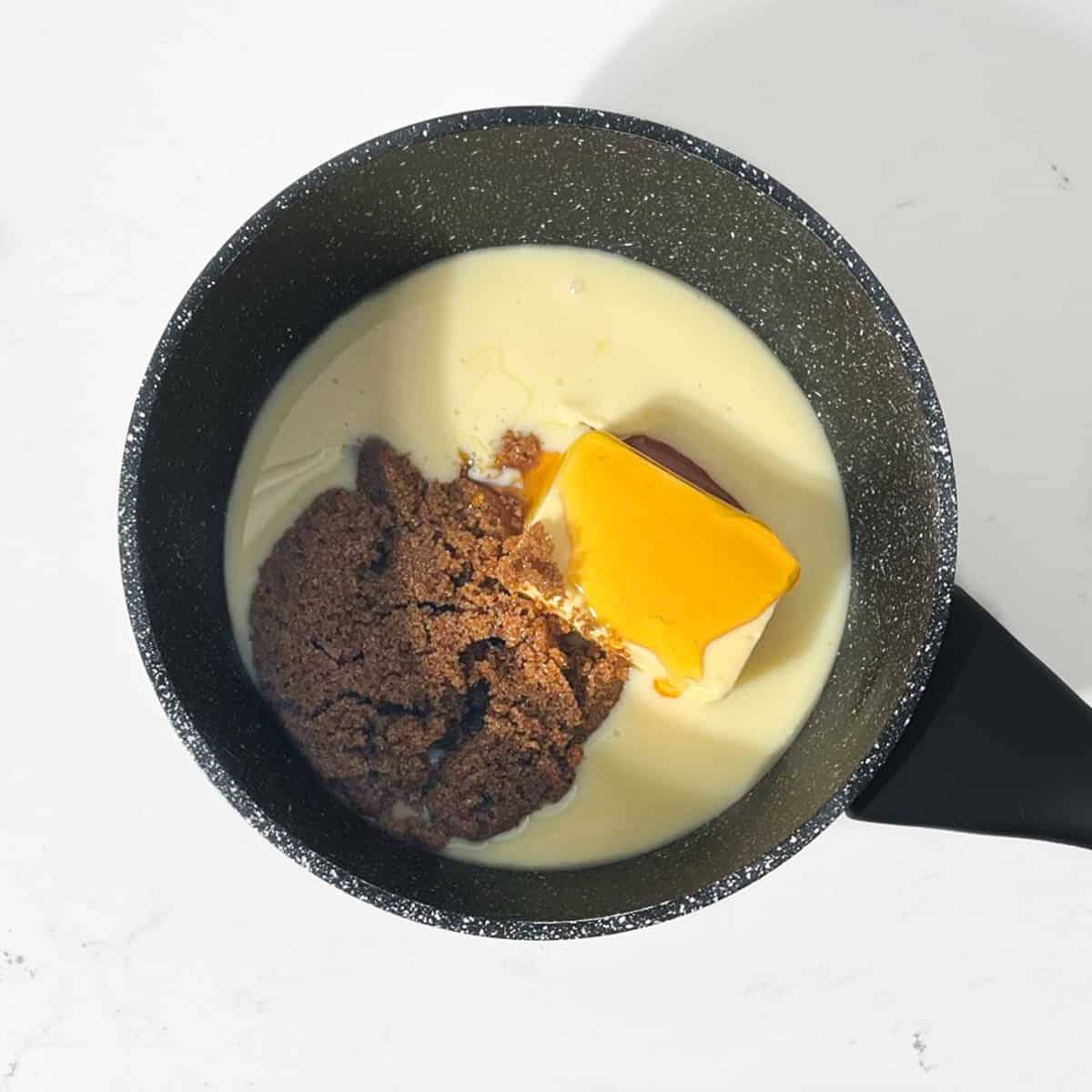
- While the biscuit base is baking, add the condensed milk, butter, dark brown sugar and golden syrup to a small saucepan.

- Place the saucepan over low heat and gently warm the mixture until the butter is fully melted and it starts to come to a slow, gentle boil, stirring constantly.

- Once the mixture comes to a slow, gentle boil, continue cooking the caramel for about 5 minutes, maintaining low heat and constantly stirring. You’ll notice it slightly thickening and taking on a slightly darker colour.
- Remove the caramel from the heat and stir in the teaspoon of salt and vanilla extract.
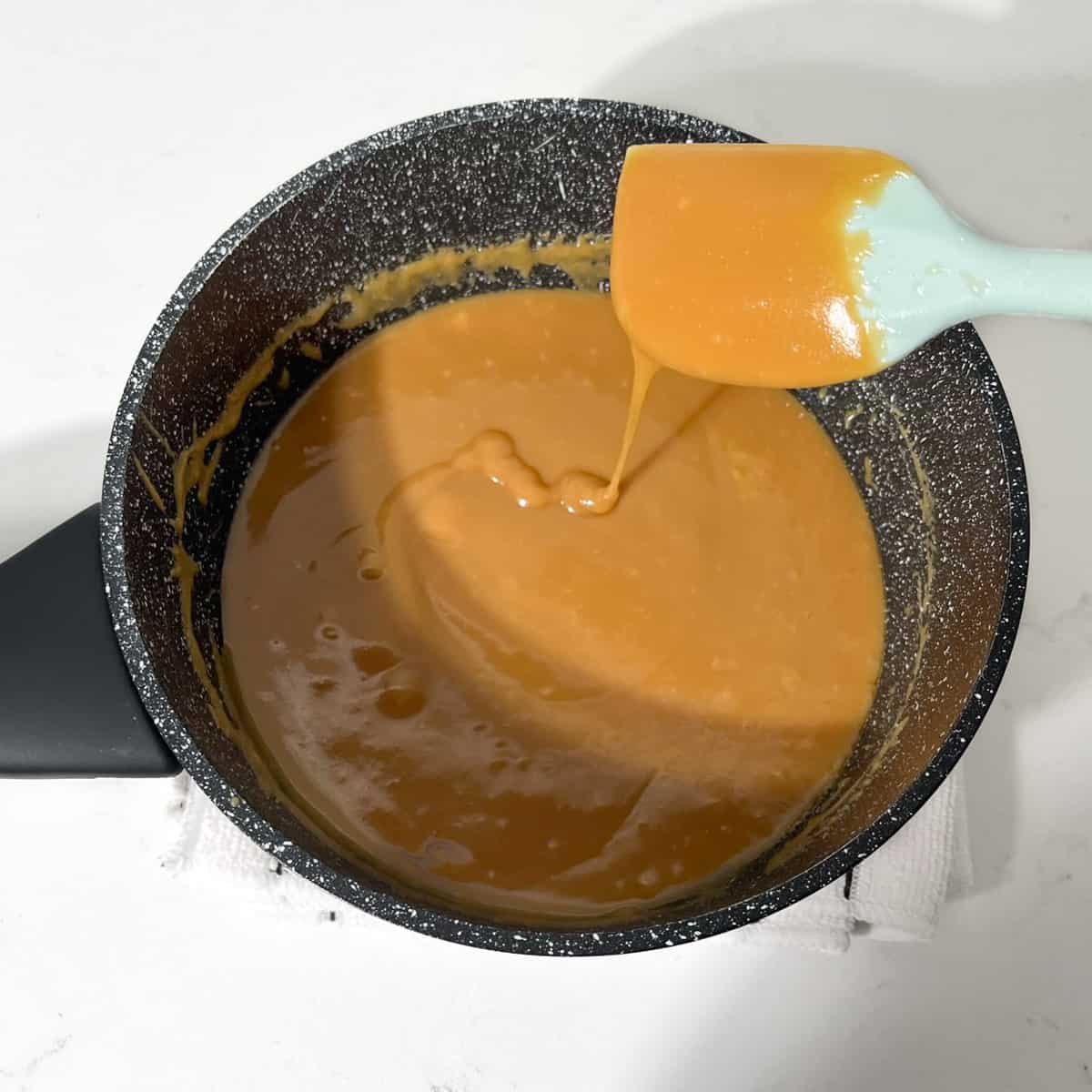
- To check the consistency of the caramel, lift some of the mixture and drizzle it over the surface. It should form a trail that vanishes within 2-3 seconds.
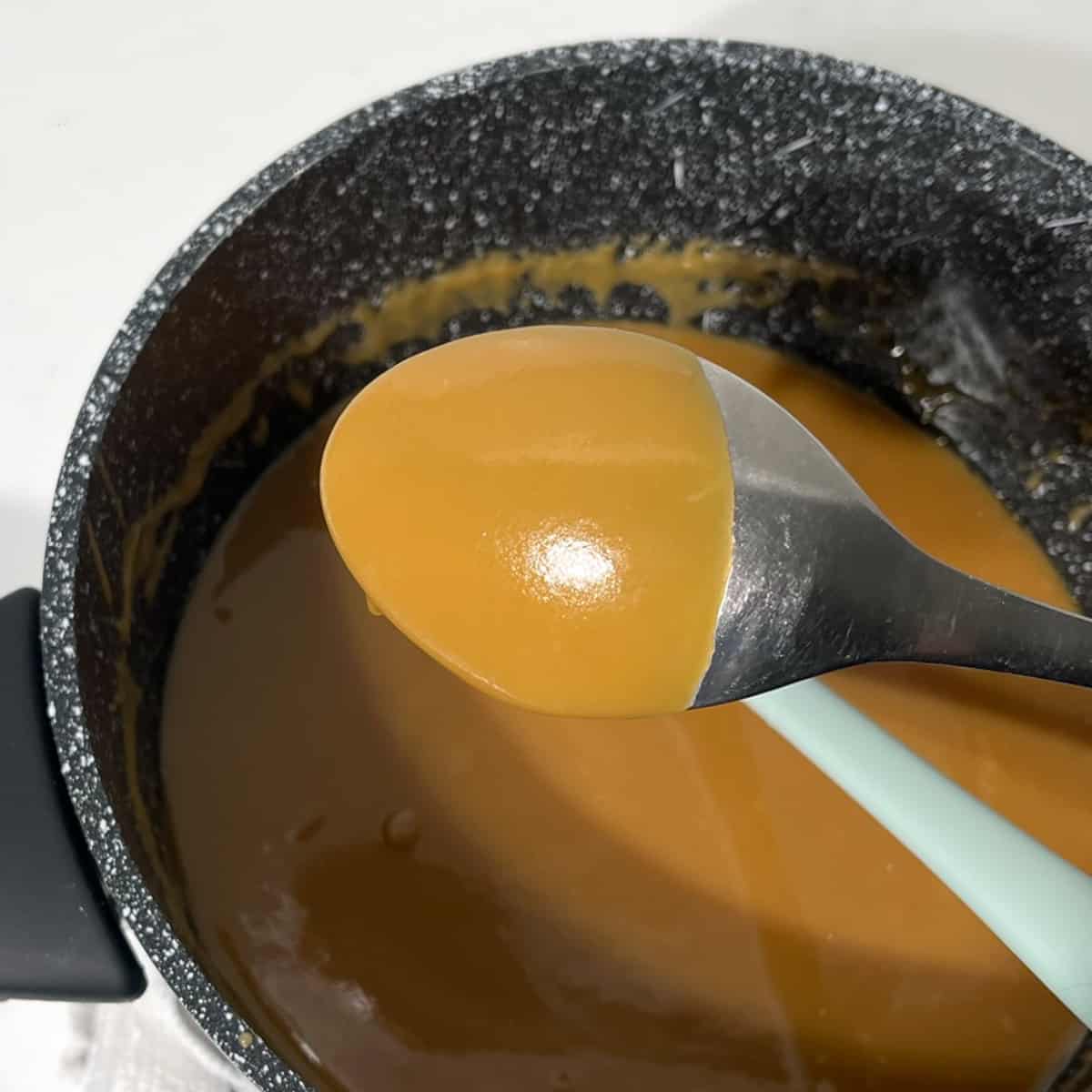
- You can also check the consistency by coating the back of a metal spoon. The surface will slightly dull after a second or two, and you should be able to draw a clear line through it. There may still be minimal dripping, but it will quickly stop.

- Immediately pour the hot caramel over the partially baked shortcake base.

- Tilt the pan from side to side until the caramel evenly coats the entire surface.

- Revisit the dough you set aside earlier and crumble small pieces across the surface of the caramel, leaving some gaps for the caramel to remain visible.
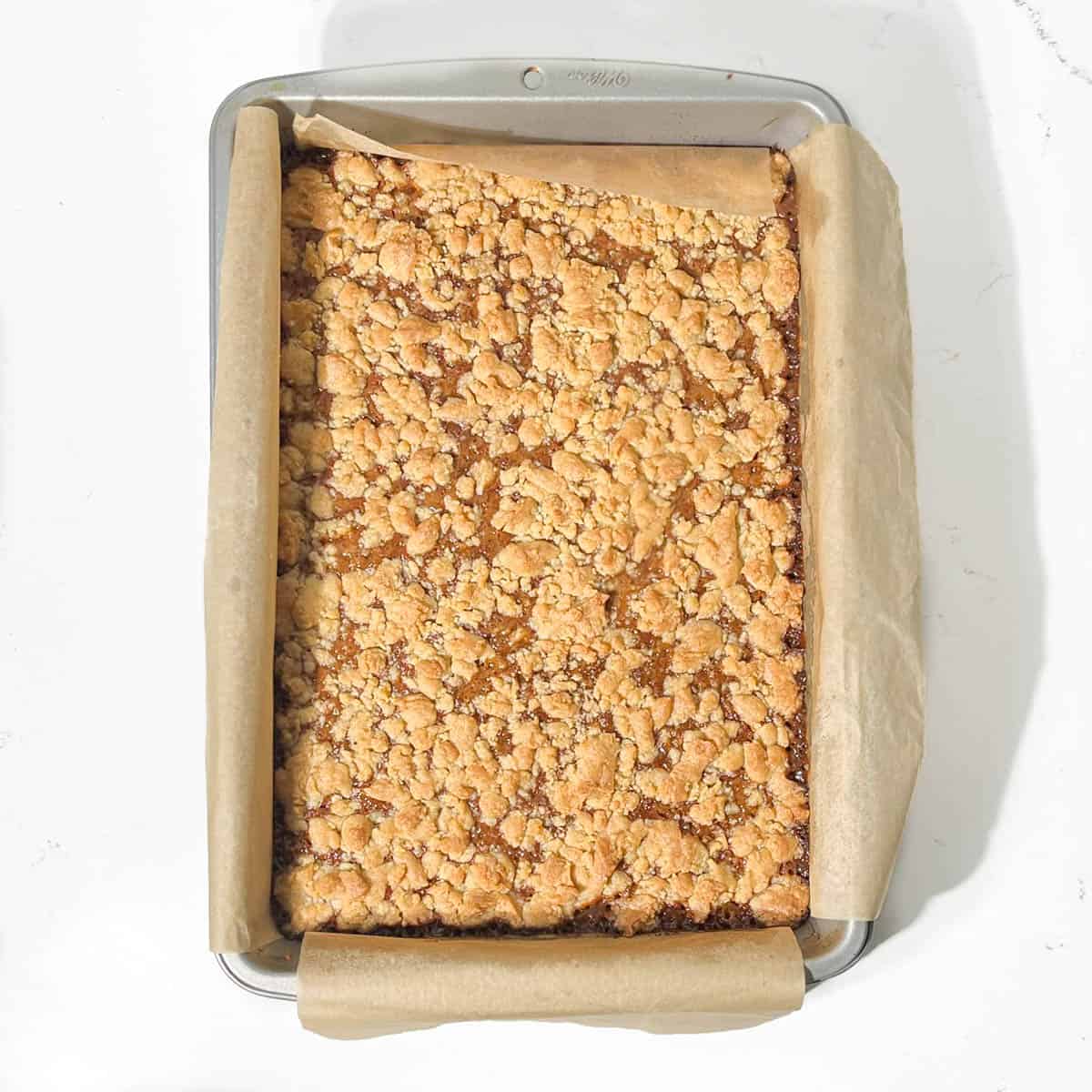
- Bake for an additional 20 minutes, or until the caramel filling turns a rich, golden brown and the crumb topping becomes light brown.
- Allow the bake to cool completely before lifting it from the tray and slicing it into squares. Sprinkle over the optional coarse sea salt and enjoy with a cup of coffee.
Helpful tip – Use a large, sharp knife to slice the tan squares. The outer edges may be darker and chewier, which some people enjoy the most. If you prefer a neater appearance, trim the sides before cutting them into neat squares or bars.
Top tips
Use softened butter for the biscuit base
Soft butter incorporates better with sugar. Beating it well with the sugar until the mixture is light and creamy incorporates air, creating a lighter, softer base. Beat for a minimum of 5 minutes.
Use full-cream condensed milk
Full cream condensed milk contributes to a rich, creamy caramel layer. Its higher fat content enhances the caramel’s smoothness and taste.
Warm the golden syrup for easier weighing
In colder climates, warming the golden syrup slightly helps its flow easier. A quick few seconds in the microwave should make it easier to pour or measure.
Bringing together the dough
Despite the shortbread dough appearing very crumbly after mixing, using your hands to lightly squish it together will ensure it binds properly.
Pot size matters
The size of the pot used to make the caramel affects the time required for it to reach the right consistency. A larger pot means a larger surface area, potentially leading to a quicker cooking process.
Testing the caramel
Taking the caramel away from the heat helps you see its consistency better. You can always put it back over the heat if it needs a little longer.
It’ll thicken more when baked, so when in doubt, rather undercook than overcook otherwise it may turn into toffee.
Don’t hang around pouring the caramel over the base
Immediately pouring the caramel onto the biscuit base is essential. Waiting too long can cause the caramel to start setting, making it difficult to spread evenly.
Easier slicing
For precise slices, heat the knife in boiled water, dry it and slice. Wipe the knife clean with kitchen paper to remove any crumbs.
Variations
- Add dark chocolate chips to the caramel slice, along with the biscuit crumb.
- Add chopped pecan nuts.
- Incorporate desiccated coconut into the crumble mixture.
Storage suggestions
To store tan squares, place them in an airtight container lined with parchment or wax paper. Keep them at room temperature, away from direct sunlight or heat sources. They can last for up to a week if stored properly.
If you’d like to extend the shelf life, you can freeze the tan squares for up to three months. Thaw them at room temperature when you’re ready to enjoy them.
More recipes using condensed milk
Condensed milk chocolate chip cookies

Tan Square – An Easy Caramel Slice Recipe
Equipment
- 1 23cm x 33cm (9" x 13") baking tin
Ingredients
For the shortbread base/crumble topping
- 250 grams unsalted butter, softened if using salted butter, omit the ½ teaspoon salt
- 130 grams granulated sugar
- 1 teaspoon vanilla extract
- 400 grams all-purpose flour
- 2 teaspoons baking powder
- ½ teaspoon salt
For the caramel layer
- 397 grams condensed milk or one can circa 397g, some weigh 400g, this is fine to use
- 100 grams unsalted butter if using salted butter, only add ½ teaspoon salt instead of 1 teaspoon.
- 100 grams dark brown sugar or light brown sugar for a lighter caramel
- 50 grams golden syrup
- 1 teaspoon salt
- 1 teaspoon vanilla extract
- flaky sea salt for sprinkling (optional) like Maldon sea salt
Instructions
To make the shortbread base
- Preheat the oven to 180C/350F.
- Prepare a 23cm x 33cm (9" x 13") baking dish by lining it with parchment paper (baking paper), leaving a slight overhang, which will make it easier to lift the slice from the tin later.A helpful tip: Lightly coat the tin with butter or cooking spray before laying the paper to help it adhere more effectively.
- Add the unsalted butter, sugar and vanilla extract to a large mixing bowl or the bowl of a stand mixer.250 grams unsalted butter, softened, 130 grams granulated sugar, 1 teaspoon vanilla extract
- Beat the ingredients together for a minimum of 5 minutes until the mixture turns light and fluffy. An electric hand mixer or a stand mixer is ideal for this step.
- Add the flour, baking powder and salt to the butter mixture. Beat together on a low-medium speed until the mixture resembles fine crumbs.400 grams all-purpose flour, 2 teaspoons baking powder, ½ teaspoon salt
- Use your hands to lightly press and bring the crumbs together until they form a uniform dough.
- Set aside roughly 220g of the shortbread dough in a separate bowl. This will be used for the crumb layer later.
- Break the rest of the dough into rough chunks and evenly spread it across the base of the baking tin. Press the dough into the base of the dish. Use a spatula or the base of a glass to flatten and even out the surface.
- Prick the base all over with the prongs of a fork.
- Bake the biscuit base in the preheated oven for 15 minutes or until it turns a very light, golden brown colour.
To make the caramel layer
- While the biscuit base is baking, add the condensed milk, butter, dark brown sugar and golden syrup to a small saucepan.397 grams condensed milk, 100 grams unsalted butter, 100 grams dark brown sugar, 50 grams golden syrup
- Place the saucepan over low heat and gently warm the mixture until the butter is fully melted and it starts to come to a slow, gentle boil, stirring constantly.
- Once the mixture comes to a slow, gentle boil, continue cooking the caramel for about 5 minutes, maintaining low heat and constantly stirring. You'll notice it slightly thickening and taking on a slightly darker colour.**To check the consistency of the caramel, lift some of the mixture and drizzle it over the surface. It should form a trail that vanishes within 2-3 seconds. **You can also check the consistency by coating the back of a metal spoon. The surface will slightly dull after a second or two, and you should be able to draw a clear line through it. There may still be minimal dripping, but it will quickly stop.
- Remove the caramel from the heat and stir in the teaspoon of salt and vanilla extract.1 teaspoon salt, 1 teaspoon vanilla extract
- Immediately pour the hot caramel over the partially baked biscuit base. Tilt the pan from side to side until the caramel evenly coats the entire surface.
- Revisit the dough you set aside earlier and crumble small pieces across the surface of the caramel, leaving some gaps for the caramel to remain visible.
- Bake for an additional 20 minutes, or until the caramel filling turns a rich, golden brown and the crumb topping becomes light brown.
- Allow the bake to cool completely before lifting it from the tray and slicing it into squares. Sprinkle over the optional coarse sea salt. A helpful tip – Use a large, sharp knife to slice the tan squares. The outer edges may be darker and chewier, which some people enjoy the most. If you prefer a neater appearance, trim the sides before cutting them into neat squares or bars.flaky sea salt for sprinkling (optional)
Notes
Use softened butter for the biscuit base
Soft butter incorporates better with sugar. Beating it well with the sugar until the mixture is light and creamy incorporates air, creating a lighter, softer base. Beat for a minimum of 5 minutes.Use full-cream condensed milk
Full cream condensed milk contributes to a rich, creamy caramel layer. Its higher fat content enhances the caramel’s smoothness and taste.Warm the golden syrup for easier weighing
In colder climates, warming the golden syrup slightly helps its flow easier. A quick few seconds in the microwave should make it easier to pour or measure.Bringing together the dough
Despite the shortbread dough appearing very crumbly after mixing, using your hands to lightly squish it together will ensure it binds properly.Pot size matters
The size of the pot used to make the caramel affects the time required for it to reach the right consistency. A larger pot means a larger surface area, potentially leading to a quicker cooking process.Testing the caramel
Taking the caramel away from the heat helps you see its consistency better. You can always put it back over the heat if it needs a little longer. It’ll thicken more when baked, so when in doubt, rather undercook than overcook otherwise it may turn into toffee.Don’t hang around pouring the caramel over the base
Immediately pouring the caramel onto the biscuit base is essential. Waiting too long can cause the caramel to start setting, making it difficult to spread evenly.Easier slicing
For precise slices, heat the knife in boiled water, dry it and slice. Wipe the knife clean with kitchen paper to remove any crumbs.Nutrition
For food safety advice, including guidance on food allergies