
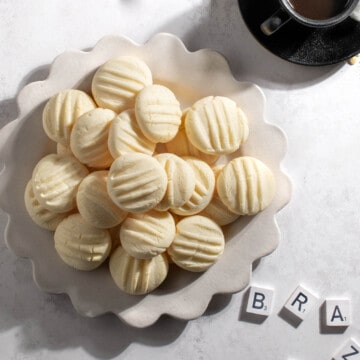
Sequilhos are Brazilian cornstarch cookies with a delicate, melt-in-the-mouth texture. They’re made with simple ingredients like cornstarch, butter, sweetened condensed milk and vanilla, and come together in one bowl.
They’re lightly sweet, buttery and crumbly in the best way, with that soft, powdery bite you get from cornstarch. Serve them with coffee or tea, or pack them into a tin for a simple homemade gift.

What are Sequilhos?
Sequilhos are small Brazilian cookies often made with cornstarch, which is why they’re also known as Biscoitos de Maizena. They’re naturally gluten-free and have a delicate, crumbly texture rather than a chewy or crisp biscuit texture.
There are different versions of sequilhos: Some are made with sweetened condensed milk, while others use sugar and butter. This version uses condensed milk for a smooth dough and a lightly sweet finish.
Why this sequilhos recipe works
- Melt-in-the-mouth texture – Cornstarch gives the cookies their delicate, crumbly bite.
- One-bowl dough – No mixer needed, just a bowl and spatula.
- Naturally gluten-free – Made with cornstarch instead of wheat flour.
- Simple ingredients – Butter, sweetened condensed milk, cornstarch and vanilla.
- Good with coffee or tea – Perfect for dunking, gifting or keeping in a biscuit tin.
For more Brazilian-inspired treats, try my casadinhos with dulce de leche or brigadeiros. If you like condensed milk recipes, my condensed milk cookies and rice pudding with condensed milk are lovely ones to try too.
Key ingredient notes
You’ll find the full ingredient list with measurements in the recipe card at the bottom of the post.

Cornstarch/cornflour
This gives sequilhos their signature melt-in-the-mouth texture. In the UK and South Africa, it may be labelled cornflour. In the US, it’s usually called cornstarch. Weigh it in grams for the most reliable result, and don’t substitute with potato starch or tapioca starch.
Add the cornstarch gradually. Depending on your condensed milk, butter and room temperature, you may not need every last spoonful. The dough should be soft and smooth, not dry or crumbly.
Note: A reader has reported that arrowroot starch worked well as a cornstarch substitute in this recipe. I have not retested the full recipe with arrowroot myself, so I’d still use cornstarch/cornflour first if you can, but it may be a useful option if you cannot have cornstarch.
Unsalted butter
Use softened butter, but not melted butter. It should mix smoothly with the condensed milk while still holding its shape. Unsalted butter gives you more control, but salted butter can be used if you leave out the added salt.
Sweetened condensed milk
This sweetens the cookies and helps make the dough smooth. In the UK and South Africa, it may simply be labelled condensed milk. In the US, it’s usually labelled sweetened condensed milk. Don’t use evaporated milk.
Vanilla extract
Use a good quality extract for the best vanilla bean flavour.
You can omit the vanilla extract if you wish, or replace it with different flavourings like lemon zest, lemon extract or almond extract.
What should sequilhos dough feel like?
The dough should be soft, smooth and easy to shape into small balls, a bit like soft modelling clay. It should not be sticky, but it also shouldn’t feel dry, cracked or crumbly. Add the cornstarch gradually and stop once the dough holds together comfortably.
How to make Sequilhos – Step by step
1. Preheat the oven to 170C/338F/gas mark 3.
2. Line a few baking sheets with parchment paper, or lightly grease them with a thin layer of softened butter.

3. Add the sweetened condensed milk, softened butter, salt and vanilla to a large mixing bowl.

4. Mix with a rubber spatula or wooden spoon until the butter and condensed milk are fully combined and no large lumps of butter remain.

5. You can also use an electric hand mixer for this step. We prefer using an electric mixer because it blends the butter and condensed milk more smoothly.

6. Beat until the mixture is smooth and creamy, with no visible lumps of butter.

7. Add about one-quarter of the cornstarch/cornflour.

8. Fold it in by hand until fully incorporated.

9. Add the next quarter of the cornstarch and fold it in again. Continue adding the cornstarch gradually, mixing well after each addition.

10. You may not need every last spoonful of cornstarch. As the dough thickens, use your hands to gently bring it together. Stop adding cornstarch once the dough is soft, smooth and easy to shape into small balls.


11. The dough should feel a bit like soft modelling clay. It should not be sticky, but it also shouldn’t feel dry, cracked or crumbly. When you press it lightly, it should leave smooth indentations without breaking apart.

12. Use a measuring spoon or cookie scoop to portion out the dough. We like to use a half-tablespoon measure for small, bite-sized cookies. You should get about 90 cookies this size from the full recipe, or fewer if you make them larger.

13. Measure out all the dough portions and place them together on a tray or plate as you work.

14. Roll each portion into a small, smooth ball.

15. Space the dough balls about two inches apart on the prepared baking trays.

16. Gently flatten each ball by pressing a fork down on top.
Top tip: If the dough sticks to the fork, chill the tray for about 5 minutes, or lightly spray the fork with non-stick spray.

17. Continue until all the dough balls have been flattened with the fork.
18. If the dough feels very soft or your kitchen is warm, chill the prepared trays for 20–30 minutes before baking. If chilling for longer than 30 minutes, cover the trays with plastic wrap/cling film to stop the dough from drying out.
19. Bake the cookies on the middle shelf for 10–12 minutes, until they look set and dry on top but still pale. Do not wait for the tops to brown.

20. Around the 10-minute mark, lift one cookie gently and check the underside. It should be lightly golden. If you made larger cookies, they may need another 1–2 minutes.
21. Leave the cookies on their trays for about 10 minutes before transferring them to a wire rack to cool completely. They are delicate when warm and will firm up as they cool.
Troubleshooting sequilhos
Dough is too dry or crumbly – You may have added too much cornstarch. Add a small spoonful of condensed milk or softened butter and gently work it in until the dough comes together.
Dough is too sticky – Add a little more cornstarch, one tablespoon at a time, until the dough is soft and easy to roll.
Cookies are hard or dry – They may have been overbaked or had too much cornstarch. Bake just until set and pale, not golden brown.
Cookies spread too much – The butter may have been too warm, or the dough may have been too soft. Chill the dough for 20–30 minutes before baking.
Cookies cracked badly – The dough may have been too dry. Add the cornstarch gradually and stop once the dough is smooth and easy to shape.
Cookies taste floury or powdery – They may be underbaked, or the cornstarch may not have been mixed in evenly. Make sure the dough is smooth before shaping.
Top Tips
Weigh the cornstarch
Use a digital scale if you can. Cornstarch/cornflour is light and easy to over-measure, and even a little too much can make the dough dry or crumbly.
Mix the butter and condensed milk well
A spatula or wooden spoon will work, but an electric hand mixer gives a smoother mixture with fewer small butter lumps.
Add the cornstarch gradually
You may not need every last spoonful. Stop adding it once the dough is soft, smooth and easy to shape into small balls.
Make the cookies the same size
A measuring spoon or small cookie scoop helps the cookies bake evenly. We use a half-tablespoon measure for small bite-sized cookies, which makes about 90. A tablespoon measure will make about 45 larger cookies.
Chill if needed
If the dough feels very soft or your kitchen is warm, chill the shaped cookies for 20–30 minutes before baking. This helps them hold their shape and keeps the fork pattern clearer.
Don’t overbake
Sequilhos should stay pale. Bake until the tops look set and dry, then check the underside for a light golden colour. If the tops brown, they may turn dry and hard.
Variations on Sequilhos
Lemon or lime – Add finely grated zest for a brighter flavour.
Orange – Add orange zest for a softer citrus version.
Coconut – Add a little desiccated coconut for texture.
Chocolate – Add cocoa powder, replacing the same amount of cornstarch.
Cinnamon – Add a little ground cinnamon to the dough.
Chocolate-dipped – Dip cooled cookies halfway into melted chocolate.
Storage
Store sequilhos in an airtight container at room temperature for up to 1 week. They are delicate, so let them cool completely before packing them away.
I don’t recommend storing them uncovered, as they can dry out. If layering them in a tin, place a sheet of baking paper between the layers.
Freezing
You can freeze sequilhos before or after baking.
To freeze before baking, shape and flatten the cookies first, then freeze them on a tray until firm. Transfer to an airtight container or freezer bag and bake from frozen, adding another 1–2 minutes if needed.
To freeze after baking, let the cookies cool completely, then pack them carefully in an airtight container. Defrost at room temperature before serving.
Sequilhos Recipe – Brazilian Cornstarch Cookies
Ingredients
- 397 grams (14 oz can) sweetened condensed milk
- 200 grams (7 oz) unsalted butter, softened
- ½ teaspoon salt omit if using salted butter
- 1 teaspoon vanilla extract
- 500 grams (17.6 oz) cornflour (cornstarch)
Instructions
- Preheat the oven to 170°C/338°F/gas mark 3.
- Line a few baking sheets with parchment paper, or lightly grease them with a thin layer of softened butter.
- Add the sweetened condensed milk, softened butter, salt and vanilla to a large mixing bowl.397 grams (14 oz can) sweetened condensed milk, 200 grams (7 oz) unsalted butter, softened, ½ teaspoon salt, 1 teaspoon vanilla extract
- Mix with a rubber spatula or wooden spoon until the butter and condensed milk are fully combined and no large lumps of butter remain.
- You can also use an electric hand mixer for this step. We prefer using an electric mixer because it blends the butter and condensed milk more smoothly.
- Beat until the mixture is smooth and creamy, with no visible lumps of butter.
- Add about one-quarter of the cornstarch/cornflour.500 grams (17.6 oz) cornflour (cornstarch)
- Fold it in by hand until fully incorporated.
- Add the next quarter of the cornstarch and fold it in again. Continue adding the cornstarch gradually, mixing well after each addition.
- You may not need every last spoonful of cornstarch. As the dough thickens, use your hands to gently bring it together. Stop adding cornstarch once the dough is soft, smooth and easy to shape into small balls.
- The dough should feel a bit like soft modelling clay. It should not be sticky, but it also shouldn’t feel dry, cracked or crumbly. When you press it lightly, it should leave smooth indentations without breaking apart.
- Use a measuring spoon or cookie scoop to portion out the dough. We like to use a half-tablespoon measure for small, bite-sized cookies. You should get about 90 cookies this size from the full recipe, or fewer if you make them larger.
- Measure out all the dough portions and place them together on a tray or plate as you work.
- Roll each portion into a small, smooth ball.
- Space the dough balls about two inches apart on the prepared baking trays.
- Gently flatten each ball by pressing a fork down on top.Top tip: If the dough sticks to the fork, chill the tray for about 5 minutes, or lightly spray the fork with non-stick spray.
- Continue until all the dough balls have been flattened with the fork.
- If the dough feels very soft or your kitchen is warm, chill the prepared trays for 20–30 minutes before baking. If chilling for longer than 30 minutes, cover the trays with plastic wrap/cling film to stop the dough from drying out.
- Bake the cookies on the middle shelf for 10–12 minutes, until they look set and dry on top but still pale. Do not wait for the tops to brown.
- Around the 10-minute mark, lift one cookie gently and check the underside. It should be lightly golden. If you made larger cookies, they may need another 1–2 minutes.
- Leave the cookies on their trays for about 10 minutes before transferring them to a wire rack to cool completely. They are delicate when warm and will firm up as they cool.
Notes
- Add the cornstarch/cornflour gradually. You may not need every last spoonful.
- The dough should feel soft, smooth and easy to shape, a bit like soft modelling clay. It should not be sticky, dry or crumbly.
- If the dough feels very soft or your kitchen is warm, chill the shaped cookies for 20–30 minutes before baking.
- Bake until the tops look set and dry but still pale. Check the underside for a light golden colour.
Nutrition
For food safety advice, including guidance on food allergies


Loved them! I divided the dough and added flavoring to make strawberry, blueberry, lemon, cocoa, and pecan, and topped them with appropriately colored sprinkles. They were adorable and delicious!
Hey Carolyn!
Those flavours and sprinkles sound absolutely amazing! It’s such a good basic recipe to put your own stamp on. You’ve definitely given me some inspiration – I am going to try
cocoa and pecan together and perhaps do a choc drizzle on top. Thanks for your lovely feedback!
Maretha.
Hi. I know you say not to swap with Tapioca starch etc but do you think it would be ok to use Arrowroot Starch? I really like the sound of these cookies and it would be an idea way for me to use up a tin of condensed milk which i’ve opened for something else but I can’t have cornstarch.
Thanks
Hi Angel!
From what I’ve researched, you can swap cornstarch for arrowroot starch in sequilhos, and it should work well.
Arrowroot is often used as a substitute because it provides a similar light and tender texture, which is key for these cookies.
I haven’t personally tried it, but it seems like a good alternative. Just use the same amount as the recipe calls for, and let me know how it turns out if you give it a go!
Warmest regards,
Maretha.
Thanks! It’s on my baking list for tomorrow. I’ll let you know how they turn out.
Hey Angel! Thank you, I hope it turns out well for you 🙂
Maretha x
Hi. It worked! and very nice they are too. Thank you!
Hey Angel!
Hooraaahh! So pleased! Thank you for the feedback and enjoy your cookies. Much love to you! x
These were delicious, thank you! Question – is it okay to freeze before (once shaped) or after baking to make at a later date?
Hey Maria,
I’m so glad you enjoyed them, thank you!
Yes, you can freeze them, and both options work well. If you freeze them after shaping, just place them on a tray first so they don’t stick together, then transfer to a container once frozen. You can bake them straight from frozen, just add a minute or two to the baking time.
They also freeze nicely after baking, just let them cool completely first, then store in an airtight container. Defrost at room temperature when you’re ready to enjoy them.
Hope that helps!
Maretha x
Good