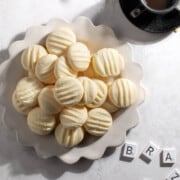
Sequilhos Recipe - Brazilian Cornstarch Cookies
Brazilian cornstarch cookies made with sweetened condensed milk, butter and vanilla. These delicate sequilhos are lightly sweet, naturally gluten-free and melt in your mouth.
Print Recipe
Save recipe
Ingredients
- 397 grams (14 oz can) sweetened condensed milk
- 200 grams (7 oz) unsalted butter, softened
- ½ teaspoon salt - omit if using salted butter
- 1 teaspoon vanilla extract
- 500 grams (17.6 oz) cornflour (cornstarch)
Instructions
- Preheat the oven to 170°C/338°F/gas mark 3.
- Line a few baking sheets with parchment paper, or lightly grease them with a thin layer of softened butter.
- Add the sweetened condensed milk, softened butter, salt and vanilla to a large mixing bowl.397 grams (14 oz can) sweetened condensed milk, 200 grams (7 oz) unsalted butter, softened, ½ teaspoon salt, 1 teaspoon vanilla extract
- Mix with a rubber spatula or wooden spoon until the butter and condensed milk are fully combined and no large lumps of butter remain.
- You can also use an electric hand mixer for this step. We prefer using an electric mixer because it blends the butter and condensed milk more smoothly.
- Beat until the mixture is smooth and creamy, with no visible lumps of butter.
- Add about one-quarter of the cornstarch/cornflour.500 grams (17.6 oz) cornflour (cornstarch)
- Fold it in by hand until fully incorporated.
- Add the next quarter of the cornstarch and fold it in again. Continue adding the cornstarch gradually, mixing well after each addition.
- You may not need every last spoonful of cornstarch. As the dough thickens, use your hands to gently bring it together. Stop adding cornstarch once the dough is soft, smooth and easy to shape into small balls.
- The dough should feel a bit like soft modelling clay. It should not be sticky, but it also shouldn’t feel dry, cracked or crumbly. When you press it lightly, it should leave smooth indentations without breaking apart.
- Use a measuring spoon or cookie scoop to portion out the dough. We like to use a half-tablespoon measure for small, bite-sized cookies. You should get about 90 cookies this size from the full recipe, or fewer if you make them larger.
- Measure out all the dough portions and place them together on a tray or plate as you work.
- Roll each portion into a small, smooth ball.
- Space the dough balls about two inches apart on the prepared baking trays.
- Gently flatten each ball by pressing a fork down on top.Top tip: If the dough sticks to the fork, chill the tray for about 5 minutes, or lightly spray the fork with non-stick spray.
- Continue until all the dough balls have been flattened with the fork.
- If the dough feels very soft or your kitchen is warm, chill the prepared trays for 20–30 minutes before baking. If chilling for longer than 30 minutes, cover the trays with plastic wrap/cling film to stop the dough from drying out.
- Bake the cookies on the middle shelf for 10–12 minutes, until they look set and dry on top but still pale. Do not wait for the tops to brown.
- Around the 10-minute mark, lift one cookie gently and check the underside. It should be lightly golden. If you made larger cookies, they may need another 1–2 minutes.
- Leave the cookies on their trays for about 10 minutes before transferring them to a wire rack to cool completely. They are delicate when warm and will firm up as they cool.
Notes
- Add the cornstarch/cornflour gradually. You may not need every last spoonful.
- The dough should feel soft, smooth and easy to shape, a bit like soft modelling clay. It should not be sticky, dry or crumbly.
- If the dough feels very soft or your kitchen is warm, chill the shaped cookies for 20–30 minutes before baking.
- Bake until the tops look set and dry but still pale. Check the underside for a light golden colour.

**Nutritional data disclaimer**
Please keep in mind that the nutritional information provided below is calculated by a third party and we cannot guarantee the accuracy. We try our best to give you the most accurate information, but we do not take responsibility for errors that may be present. Also, the nutritional value of the recipe may change depending on the exact brands and products used. We recommend that you consult with a qualified healthcare professional or registered dietitian for personalised advice on your dietary needs.
Nutrition
Calories: 48kcal | Carbohydrates: 7g | Protein: 1g | Fat: 2g | Saturated Fat: 1g | Polyunsaturated Fat: 0.4g | Monounsaturated Fat: 1g | Cholesterol: 1mg | Sodium: 19mg | Potassium: 43mg | Fiber: 0.5g | Sugar: 3g | Vitamin A: 12IU | Vitamin C: 0.1mg | Calcium: 21mg | Iron: 0.1mg
